The global transition toward zero-emission urban and off-road mobility has accelerated at an unprecedented rate. Central to this global shift is China’s advanced e-mobility manufacturing sector, which stands as the premier hub for high-performance, cost-effective, and fully certified electric two-wheelers. However, for international importers, distributors, and brand operators, securing a reliable China Best Homologated Electric Motorcycle Supplier requires far more than comparing baseline factory prices. It demands a rigorous evaluation of regulatory compliance, structural vehicle safety, powertrain efficiency, and robust supply chain infrastructure.
Vehicle homologation represents the official approval issued by governing transport authorities—such as the European Union’s Whole Vehicle Type-Approval (WVTA) system under Regulation (EU) No 168/2013, the United States Department of Transportation (DOT), and Australia's ADR framework. Homologated electric motorcycles must satisfy stringent safety, electromagnetic compatibility (EMC), functional braking (ABS/CBS), and battery architecture mandates (including UN38.3 and EN ISO 13849 safety standards). Working directly with established Chinese OEM/ODM exporters who maintain pre-certified EEC (European Conformity) certificates, Certificate of Conformity (CoC) documentation, and DOT registrations provides international buyers with immediate market access, reducing regulatory barrier risks and shortening time-to-market by 8 to 14 months.
Complete L1e-B and L3e-A1/A2 homologation coverage for seamless registration across all 27 EU member states and UK regulations.
Integrated Smart BMS with Automotive-Grade NCM & LiFePO4 cells supporting fast-charging (0-80% under 4 hours) and thermal stability.
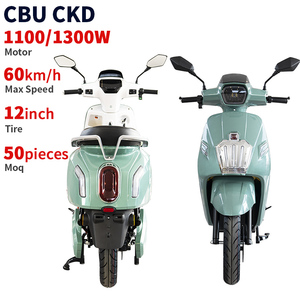
Complete Knock-Down (CKD) and Semi-Knock-Down (SKD) shipping strategies optimized for reduced tariff duties and localized assembly.
To properly align global procurement strategies with consumer demand, buyers must differentiate between vehicle categories established under international transport frameworks. Top-tier Chinese manufacturers specialize in distinct motor output tiers, battery configurations, and chassis structural designs tailored for diverse user applications ranging from urban last-mile delivery to high-speed highway commuting and off-road trail riding.
| Vehicle Category | Power Output | Top Speed | Target Battery Specs | Homologation Standards | Primary Application |
|---|---|---|---|---|---|
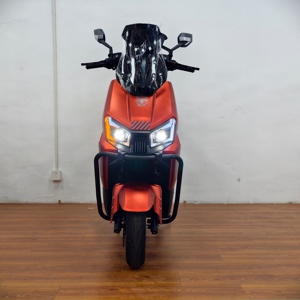
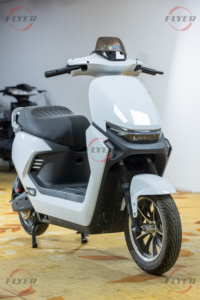
| L1e-B Moped | 1,000W - 3,000W | 45 km/h | 60V - 72V (Removable) | EEC / CoC / DOT Class 1 | Urban commuting, rental fleets, city logistics |
| L3e-A1 Light Moto | 3,000W - 11,000W | 70 - 90 km/h | 72V 40Ah - 50Ah Lithium | EEC WVTA / CBS Brakes | Suburban commuters, express delivery |
| L3e-A2 High Performance | 11,000W - 25,000W+ | 100 - 130+ km/h | 72V - 96V Dual Pack / Liquid Cooled | EEC WVTA / ABS / EMC Tested | Highway cruising, premium enthusiast market |
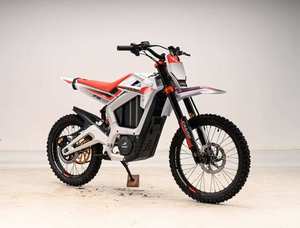
| Off-Road / Dirt Class | 3,000W - 12,000W (Peak) | 75 - 95 km/h | 72V High-Discharge LiFePO4 | CE / EN ISO 12100 / UL2272 | Sports, trail riding, off-grid adventure |
Compliance goes far beyond maximum speed throttles. Full legal compliance in tier-one markets necessitates Combined Braking Systems (CBS) for L3e-A1 classes and Anti-lock Braking Systems (ABS) for higher power brackets. Electrical architecture must be engineered around ISO-compliant CAN-bus communications, facilitating real-time telemetry between the Field-Oriented Control (FOC) vector inverter, the Smart Battery Management System (BMS), and the digital TFT instrument cluster. Advanced suppliers integrate regenerative braking systems (E-ABS) that convert kinetic deceleration energy back into battery charge, enhancing range efficiency by up to 12-15%.
As the electric motorcycle landscape matures, strategic sourcing managers must look beyond current inventory requirements and align their business models with upcoming technological transitions. Key developments shaping the next half-decade include:
Transitioning from legacy 48V/60V systems to 72V, 84V, and 96V architectures minimizes current draw, mitigates line resistive losses, improves thermal dynamics, and enables true automotive-style Type 2 AC fast charging.
While NCM chemistries remain dominant for high energy density, Lithium Iron Phosphate (LiFePO4) is rapidly expanding in commercial fleet sourcing due to superior thermal stability, zero fire risk, and extended cycle life (3,000+ full cycles).
Commercial importers increasingly mandate factory-fitted 4G/GPS IoT modules. Enable Remote Diagnostics, Over-The-Air (OTA) firmware updates, geofencing, and automated fleet management out of the box.
Furthermore, shifting geopolitical trade landscapes and tariff adjustments are driving importers toward CKD (Complete Knock Down) and SKD (Semi Knock Down) purchasing models. By sourcing pre-tested chassis frames, homologated powertrains, and certified electronics from China, international distributors can perform final assembly in regional hubs—dramatically lowering import duties, minimizing container freight volume costs (fitting up to 3x more units per 40ft HQ container), and qualifying for local manufacturing incentives.
As an established manufacturing authority and export pioneer, our industrial infrastructure offers global partners a distinct competitive edge across design, compliance, cost optimization, and supply continuity.
Every vehicle unit undergoes multi-stage quality control protocols before leaving the assembly line. Our testing facilities include:
We empower global brands, fleet operators, and government procurement agencies by offering tailored customization pathways:
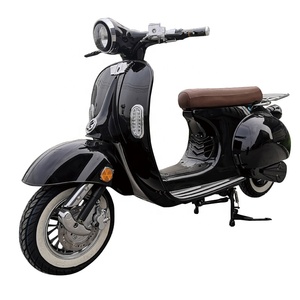
Bespoke fairing designs, custom colorways, UV-resistant paint coats, ergonomic saddle upgrades, retro vintage or futuristic streetfighter bodywork styling.
Match QS or Bosch motor configurations with custom-tuned Votol, FarDriver, or Sabvoton sine-wave controllers tuned specifically for climbing gradeability or top-end velocity.
Reinforced rear sub-frames, insulated food delivery box mounts, dual-battery hot-swap tray setups, and heavy-duty front basket integrations for fleet utility.
Below are expert responses to critical questions faced by B2B buyers when evaluating homologated electric motorcycle suppliers in China.
Building a successful electric motorcycle distribution brand demands a long-term strategic partnership with a reliable manufacturer. By bridging advanced Chinese electric vehicle engineering, factory-direct pricing, and complete homologation readiness, we enable global business partners to scale quickly, comply fully, and lead in their local markets.
Whether you are seeking high-speed L3e street models, durable vintage retro mopeds, or high-torque off-road dirt bikes, our engineering team is prepared to support your technical specifications, private labeling goals, and logistics requirements.
