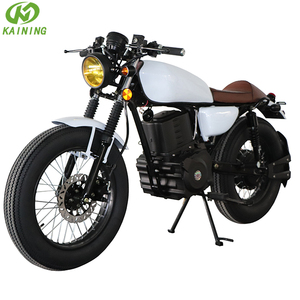
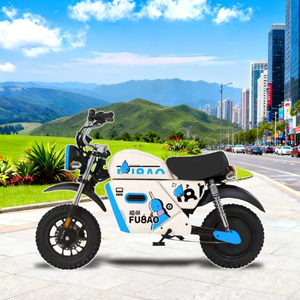
Direct Factory Supply with Complete EEC / DOT Homologation & Custom CKD/SKD Support
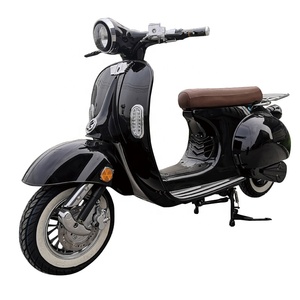
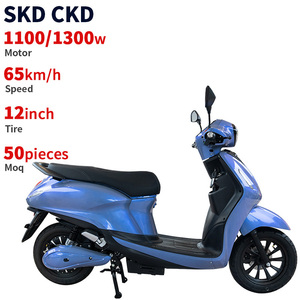
The global light electric vehicle (LEV) market is undergoing a fundamental technological shift. Urban centers across Europe, North America, and Southeast Asia are implementing stringent low-emission zones while simultaneously accelerating electrification mandates for fleet delivery networks and personal commuters. Historically categorized by lightweight, low-speed moped-style transport (under 25 km/h), the demand trajectory has moved decisively toward high-speed, long-range electric motorcycles capable of sustaining highway speeds exceeding 80 km/h to 120 km/h.
China has established absolute leadership in the global electric motorcycle supply ecosystem. Accounting for over 80% of global LEV manufacturing volume, top-tier Chinese original equipment manufacturers (OEMs) and original design manufacturers (ODMs) have evolved beyond low-cost mass production. Today, leading Chinese factories integrate advanced powertrain engineering, automotive-grade lithium-ion thermal management, Permanent Magnet Synchronous Motors (PMSM), and intelligent Field Oriented Control (FOC) vector controllers into standardized production lines.
For international buyers, fleet managers, and brand distributors, sourcing from tier-one Chinese fast electric motorcycle suppliers provides a clear competitive edge: lower total cost of ownership (TCO), rapid customization cycles via Knock-Down kits (CKD/SKD), and full regulatory homologation compliance including European Whole Vehicle Type Approval (EEC/e-mark) and US Department of Transportation (DOT) standards.
To qualify as a "fast" electric motorcycle in modern commercial procurement, a platform must achieve specific performance, thermal stability, and structural strength metrics. Chinese manufacturing hubs—primarily concentrated in Jiangsu, Zhejiang, and Guangdong provinces—have standard specs for key component groups:
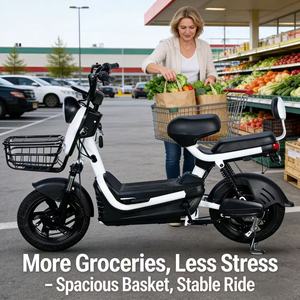
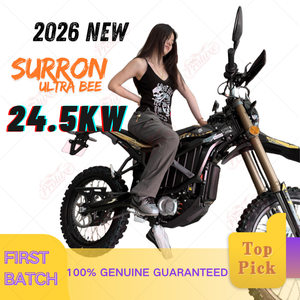
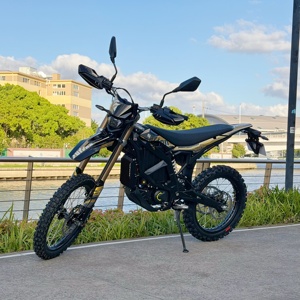
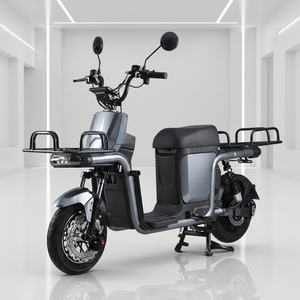
Powertrain architecture dictates performance stability under continuous heavy loads. Hub motor configurations (typically ranging from 1100W up to 3000W) integrated into the rear wheel provide exceptional space efficiency, zero maintenance transmission, and cost benefits for urban commuter models and last-mile delivery fleets reaching speeds up to 65–80 km/h. Conversely, for high-performance dirt bikes and sporty street machines (such as peak 24.5kW models), mid-drive PMSM setups paired with chain or carbon belt drives are standard. Mid-drive arrangements minimize unsprung mass, balance weight distribution at a 50:50 ratio, and prevent thermal saturation during prolonged uphill or high-speed acceleration.
Modern fast electric motorcycles rely on high-energy-density Lithium Nickel Manganese Cobalt Oxide (NMC) or high-cycle-life Lithium Iron Phosphate (LFP) cell configurations. Commercial buyers must evaluate:
Raw power requires precise modulation. Modern Chinese manufacturing uses self-learning FOC sine-wave vector controllers that convert DC battery current to AC motor drive with up to 98% energy efficiency. These controllers integrate regenerative braking systems (EBS), multiple power modes (Eco, Sport, Hyper), reverse functionality, and real-time diagnostic reporting via digital TFT displays or integrated IoT cellular modules.
High-tensile steel trellis frames paired with CNC-machined forged aluminum swingarms ensure zero chassis flex during high-G cornering and harsh off-road impacts.
Full compliance frameworks built into manufacturing workflows, supporting EEC L3e-A1/A3 classification, COC certificates, and DOT compliance for global export.
Factory-installed 4G/GPS modules allowing real-time fleet tracking, remote over-the-air (OTA) firmware updates, and app-based keyless start systems.
The global EV marketplace presents significant supply chain friction for importers, including shifting regulatory frameworks, freight cost fluctuations, and raw material volatility. Partnering directly with experienced Chinese electric motorcycle manufacturers addresses these operational risks through distinct structural advantages:
Leading Chinese industrial clusters integrate every phase of production within a 50-kilometer radius. From raw aluminum stamping and automated robotic welding to stator winding, plastic injection molding, and surface painting, local supply chains eliminate logistical bottlenecks. This density shortens prototype-to-production lead times from 12 months down to 45–60 days for OEM requests.
To optimize import duties and local assembly tariffs, top suppliers offer complete Completely Knocked Down (CKD) and Semi-Knocked Down (SKD) packaging configurations:
Tier-one factories maintain strict quality control standards, including automated end-of-line dyno testing, battery vibration stress tests, salt-spray anti-corrosion evaluations, and IPX7 high-pressure rain chamber waterproofing checks. Every vehicle leaves the assembly floor with traceable quality control documentation and digital diagnostic logs.
Global buyers must align procurement strategies with emerging technical shifts over the next five years. Evaluating prospective factory partners requires understanding their commitment to these foundational industry trends:
The industry is migrating away from conventional 48V/60V systems toward higher voltage platforms. Operating at 72V to 96V reduces current draw for the same power output, lowering heat generation in wiring harnesses and controllers, boosting system efficiency, and supporting higher sustained top speeds without component degradation.
Commercial micro-mobility operators and delivery fleets are demanding modular, unified battery form factors. Forward-thinking Chinese factories are designing standardized battery compartments capable of accommodating cross-platform smart packs compatible with city-wide battery swapping infrastructure.
To offset battery weight, premier sport and dirt bike manufacturers (such as those building 24.5kW off-road platforms) are incorporating high-strength hydroformed aluminum alloy frames and composite subframes. Weight reduction improves power-to-weight ratios, enhances cornering agility, and extends range per charge cycle.
To streamline the OEM/ODM purchasing process and mitigate procurement risks, international buyers should follow this standardized sourcing framework when working with Chinese electric motorcycle suppliers:
Define target market parameters: top speed (km/h), max gradient capability, continuous power output, battery capacity (kWh), cell chemistry preferences, target homologation class (L1e/L3e/DOT), and target retail price point.
Order fully assembled sample units for local road testing, thermal boundary stress analysis, and compliance verification against local safety standards (e.g., EEC Certificate of Conformity verification).
Finalize paint codes, decal artwork, customized TFT startup splash screens, user manuals, toolkits, and outer packaging crate design.
Initiate mass production with scheduled third-party pre-shipment inspections (PSI) verifying frame alignment, wiring insulation resistance, brake torque specs, and battery capacity benchmarks.
Consult our engineering team, request detailed product specification sheets, sample quotes, or schedule a factory tour.
Send an Inquiry