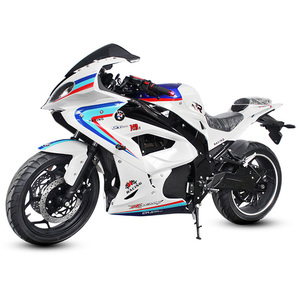
Precision-engineered urban, racing, off-road, and utility electric two-wheelers tailored for global importers, distributors, and fleet operators.
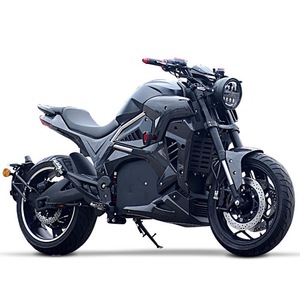
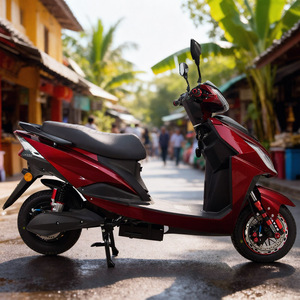
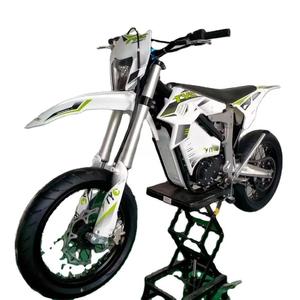
The global light electric vehicle (LEV) sector is undergoing a profound paradigm shift driven by stringent decarbonization mandates, urban zero-emission zones (ZEZ), and rapid technological advancements in energy-density optimization. Commercial procurement managers, brand operators, and fleet logistics directors face an increasingly complex sourcing landscape. Navigating European Union regulatory standards requires more than mere compliance—it demands a deep understanding of CE Certification (EN 15194 & EU Regulation 168/2013), vehicle classification directives (L1e-B through L3e-A1), and total cost of ownership (TCO) optimization.
As a leading electric moped motorcycle factory and strategic OEM/ODM partner, our engineering philosophy bridges high-concept European styling—rooted in custom designer mobility traditions established by engineering pioneers like Simon Dabadie (founder of DAB Motors)—with scalable, high-precision manufacturing. This B2B whitepaper outlines critical procurement evaluation criteria, technical architecture trends, regulatory matrices, and long-term procurement trajectories for enterprise buyers worldwide.
Procuring electric mopeds and motorcycles for distribution in Europe, North America, and LATAM requires strict adherence to international safety, electromagnetic, and structural directives. Importers must verify that their manufacturing partners maintain active, audit-ready compliance certificates across the following critical framework directives:
| Homologation Code | Vehicle Category | Speed & Power Ceiling | Mandatory CE Directives | Primary Commercial Use Case |
|---|---|---|---|---|
| L1e-B | Light Two-Wheel Moped | Speed ≤ 45 km/h | Power ≤ 4,000W | 2014/30/EU (EMC), 2006/42/EC (Machinery), EN 15194 | Urban commuting, Last-mile food delivery fleets |
| L3e-A1 | Low-Performance Motorcycle | Speed ≤ 100 km/h | Power ≤ 11 kW | EU 168/2013, ECE-R100 (Battery Safety), ECE-R78 (Braking) | Suburban commuting, Commercial delivery express |
| L3e-A2 / A3 | High-Performance Enduro/Street | Speed > 120 km/h | Power > 11 kW to 18 kW+ | Full EEC/COC Type-Approval, UN38.3, ISO 26262 (Functional Safety) | Racing style, Enduro off-road, Luxury consumer market |
Our manufacturing facilities operate under strict ISO 9001:2015 Quality Management Systems. Every vehicle leaving our assembly line undergoes automated electrical safety testing, chassis fatigue stress testing, and real-time controller diagnostics to ensure immediate compliance upon entry into destination ports.
Key strategic shifts reshaping global OEM/ODM procurement strategies over the next 5 to 10 years.
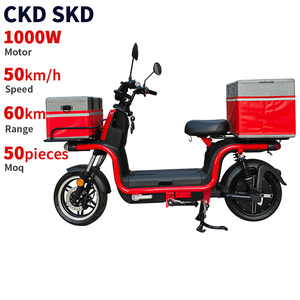
Global import tariffs and logistics costs favor Knocked-Down (CKD/SKD) supply models. Distributing semi-assembled kits allows regional importers to reduce freight volumes by up to 65% while leveraging local assembly tax incentives.
Transitioning from traditional 48V systems toward 72V and 96V smart battery topologies. High-voltage platforms minimize thermal losses, increase motor efficiency, and allow ultra-fast DC charging protocols for continuous fleet uptime.
Commercial B2B fleets require embedded CAN-BUS IoT modules. Real-time GPS tracking, remote battery state-of-health (SoH) diagnostic monitoring, over-the-air (OTA) firmware updates, and anti-theft geofencing are standard OEM specifications.
While ternary NCM lithium offers high energy density for racing models (e.g., 5000W to 18kW variants), Lithium Iron Phosphate (LiFePO4) and emerging Sodium-ion chemistries dominate utility procurement due to 3,000+ cycle lifespans and superior thermal stability.
Following high-profile luxury crossovers—such as DAB Motors collaborating with BRABUS and Burberry—commercial procurement is leaning into custom designer aesthetics, high-end surface finishes, and carbon-composite chassis integration for premium urban demographics.
Modern electric two-wheeler engineering is shifting away from low-cost, uncalibrated hub motors toward integrated mid-drive powertrains featuring helical gear reduction and vector field-oriented control (FOC) inverters. In our advanced R&D labs, key engineering benchmarks focus on three core pillars:
1. Thermal Dissipation & Sustained Power Output: Standard hub motors often experience thermal throttling under continuous hill-climbing or heavy cargo loads (up to 300KG load capacity). By implementing liquid-cooled or aluminum fins-encapsulated stator designs alongside liquid-silicone heat sinks, our mid-drive and high-power hub systems maintain optimal operational temperatures (<85°C) even under maximum duty cycles.
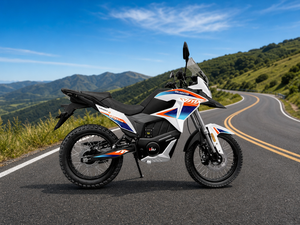
2. Structural Frame Geometry & Material Science: Lightweighting is critical for extending operational range without inflating battery capacity costs. Utilizing high-tensile hydroformed steel tubing, cold-extruded aluminum alloy swingarms, and robotic TIG welding protocols ensures structural rigidity under high-speed cornering and off-road stress (such as in our 12,000W to 18,000W Dirt Bike and Enduro platforms).
3. Advanced Regenerative Braking Algorithms: Dual-channel ABS paired with electronic regenerative braking systems (E-ABS) recovers up to 14% of kinetic energy during decelerations while dramatically reducing friction brake pad wear, yielding substantial maintenance savings for commercial fleets.
Originating from a design-first mindset championed in France since 2018 under founder Simon Dabadie, our business model seamlessly unites boutique engineering singularity with large-scale industrial manufacturing capabilities. We cater to global partners, distributors, and fleet enterprise buyers through four core pillars of operational excellence:
Full-stack customization of frame colorways, branding decals, battery voltage specifications, digital instrument cluster UI, and specialized utility cargo racks for delivery fleets.
Direct sourcing agreements with tier-1 component suppliers (CATL/LG battery cells, BMS protection units, Envision controllers, Brembo-grade hydraulic brakes) ensure long-term parts availability.
Every shipment is accompanied by complete CE certificates, EEC Type-Approval documents, Certificate of Conformity (COC), MSDS battery safety dossiers, and UN38.3 transport test reports.
Detailed technical answers for commercial buyers, importers, and vehicle distributors.
Contact our B2B export engineering team today to receive detailed technical datasheets, full OEM pricing catalogs, and container logistics solutions.
Inquire Now