0%

A custom electric motorcycle is a battery-powered bike shaped around a rider’s needs, preferred style, and practical use. Its design may involve a modified frame, a different seat, revised controls, or selected motor and battery components. The word “custom” does not guarantee better performance. It means choices are made for a particular build, often with trade-offs.

A careful project starts with the basics: how far the bike needs to travel, where it will be charged, and what support its components require. Battery capacity, motor output, weight, brakes, and suspension all affect how a motorcycle feels and functions. A compact urban build might use a narrow seat and tidy wiring, while a touring-focused version may need more range and room for luggage. Details matter. Even handlebar reach can change comfort on a long ride.

The custom electric motorcycle also raises questions that a striking paint finish cannot answer. Are replacement parts available? Can a qualified technician inspect the electrical system? Does the finished bike suit the rider’s skill and daily routine? These questions help distinguish thoughtful design from appearance alone. Some choices will be compromises, and plans may need revision when cost, weight, or component compatibility becomes clear. That is not failure; it is part of building responsibly. Understanding these decisions makes it easier to judge whether a custom electric motorcycle is a practical fit, rather than simply an exciting idea.
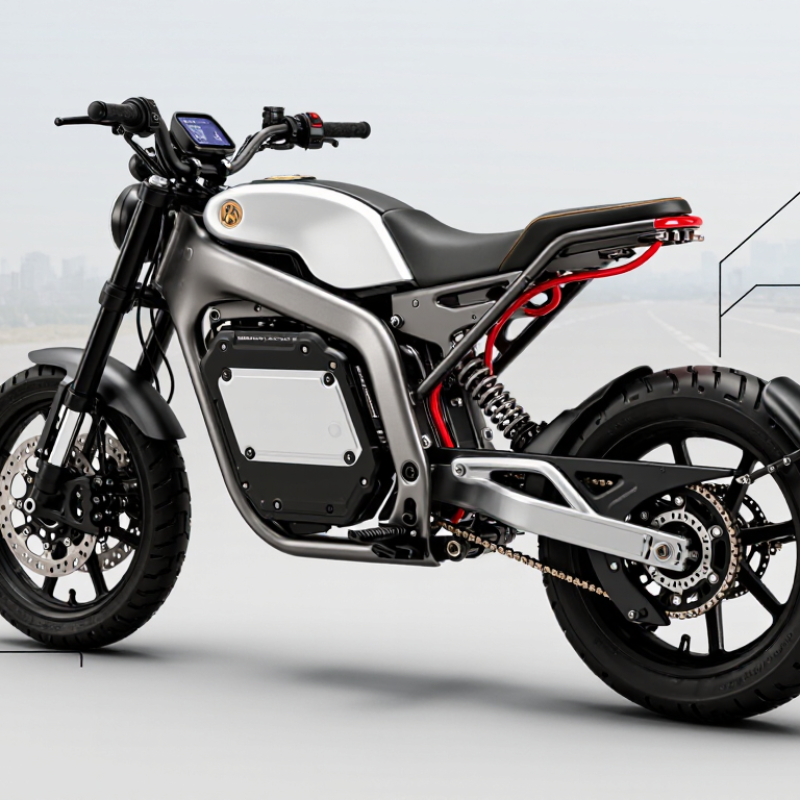
What Is a Custom Electric Motorcycle?

What Defines a Custom Electric Motorcycle? L3e Classes and Core Systems

What Is a Custom Electric Motorcycle?

What Defines a Custom Electric Motorcycle? L3e Classes and Core Systems

A custom electric motorcycle is defined by its configuration, not merely its paint or accessories. It combines a tailored frame, electric drive, battery, controls, and safety components. Not just styling. In the EU type-approval system, L3e covers two-wheel motorcycles. L3e-A1 allows up to 11 kW continuous rated power and a power-to-weight ratio no higher than 0.1 kW/kg. L3e-A2 allows up to 35 kW, with a ratio no higher than 0.2 kW/kg. L3e-A3 covers the remaining L3e motorcycles. A custom build does not automatically change its class.

Class affects more than paperwork. It helps clarify the machine’s power and intended use. The International Energy Agency’s Global EV Outlook 2024 reports that electric two- and three-wheeler sales exceeded 10 million in 2023, around one-fifth of global sales in that segment. That scale makes reliable battery management, motor control, braking, and thermal design increasingly important. Still, the boundary between a distinctive build and a practical daily motorcycle can feel fuzzy.

Tips: Check continuous rated power, vehicle mass, battery capacity, and brake specifications together. Peak power alone can mislead. A small detail, like added battery weight, may change handling more than expected.

How Do Battery and Motor Ratings Shape Performance? kWh, kW, and Voltage

What Is a Custom Electric Motorcycle?
How Do Battery and Motor Ratings Shape Performance? kWh, kW, and Voltage

On a custom electric motorcycle, battery and motor numbers describe different things. Kilowatt-hours (kWh) measure stored energy; kilowatts (kW) measure power delivered at a moment. More kWh can support longer rides, but actual range also depends on speed, rider weight, temperature, tires, and terrain. The International Energy Agency’s Global EV Outlook 2024 estimates nearly 10 million electric two- and three-wheelers were sold worldwide in 2023. That scale makes clear why comparing specifications matters, but headline numbers alone tell little about a particular build. Numbers need context.

Voltage helps explain how power reaches the motor. At the same power, a higher-voltage system generally needs less current, which can reduce electrical losses and heat when components are properly matched. For example, a 12 kW load at a nominal 72 V draws about 167 amps before losses. That is a demanding current, so cables, connectors, controller, and battery limits all matter. A motor’s peak kW rating is not the same as its continuous rating; peak output may last only briefly. Check both, along with usable battery capacity and thermal limits. I still find one detail easy to overlook: a large battery cannot compensate for a controller that limits output, and a powerful motor can drain a small pack quickly. Ratings are useful, but they are not the ride.

What Is a Custom Electric Motorcycle? How Battery and Motor Ratings Shape Performance

Example Build Battery Capacity Nominal Voltage Motor Output
(Continuous / Peak)
Estimated Energy Use Illustrative Range Typical Performance Character
Light Urban 2.9 kWh
(about 72 V × 40 Ah)
72 V 3 kW / 6 kW 4–6 kWh per 100 km About 43–65 km Designed for lower-speed city trips; modest peak power and a smaller battery help keep the build lighter.
Daily Commuter 5.0 kWh
(about 96 V × 52 Ah)
96 V 5 kW / 10 kW 5–7 kWh per 100 km About 64–90 km A balanced setup for regular commuting, with more stored energy and acceleration headroom than a light urban build.
Performance Street 8.0 kWh
(about 120 V × 67 Ah)
120 V 10 kW / 20 kW 7–10 kWh per 100 km About 72–103 km Higher motor output can support stronger acceleration, but sustained high speeds usually increase energy use and reduce range.
Longer-Range Touring 12.0 kWh
(about 144 V × 83 Ah)
144 V 15 kW / 30 kW 8–12 kWh per 100 km About 90–135 km A larger battery stores more energy for longer rides; actual touring range depends strongly on speed, load, and conditions.

How to read the ratings: kWh measures stored battery energy, kW measures motor power, and voltage describes the battery system’s electrical potential. Battery energy in kWh is approximately voltage × amp-hours ÷ 1,000. Range figures are illustrative estimates, calculated using about 90% of nominal battery capacity as usable energy; real-world results vary with rider and passenger weight, terrain, speed, temperature, tires, and riding style.

Which Safety Rules Apply? UNECE R136 and the L3e-A1 11 kW Limit

A custom electric motorcycle may look simple: a narrow frame, a quiet motor, and a battery pack beneath the seat. Its legal category depends on measurable specifications, not appearance. For the L3e-A1 class, the maximum continuous rated power is 11 kW, with a power-to-weight ratio no greater than 0.1 kW/kg. A small change in battery, motor, or vehicle mass can affect whether a build still fits those limits.

UNECE Regulation No. 136 sets electrical-safety requirements for electric vehicles in category L. It addresses hazards such as electric shock and the safety of the rechargeable energy storage system. In practice, assessment may involve checking insulation, protective barriers, and battery behavior under specified conditions. The rule is not a general guarantee that every custom motorcycle is road-ready. Details matter.

Keep technical records. Really. Record component ratings, wiring changes, battery specifications, and test results as the build develops. A neat cable run helps, but it does not prove compliance. Approval procedures and registration requirements can vary by market, so confirm them with the relevant authority or a qualified testing service before relying on an L3e-A1 designation. Custom work can make the paperwork less tidy than the machine. That part is easy to underestimate.

How Are Energy Use and Range Measured? WMTC Testing and Battery Capacity

For a custom electric motorcycle, range depends on more than the battery’s advertised size. WMTC, the World Motorcycle Test Cycle, uses a repeatable riding pattern to measure energy use under controlled conditions. Where applicable, it helps compare motorcycles fairly, but it is not a promise of everyday distance.

Results are usually expressed as energy consumed per distance, such as watt-hours per kilometre. A lower figure means the motorcycle needs less energy to cover the same route. Battery capacity is often listed in kilowatt-hours, but nominal capacity is not always fully available to the rider. The usable figure gives a more practical estimate. Divide usable capacity by measured consumption to estimate range. Simple, but not perfect.

Real roads interfere. A cold morning, a steep climb, extra luggage, or a soft rear tire can raise consumption. Frequent stops and strong acceleration may also change the result. Regenerative braking can recover some energy, though the amount varies with setup and riding conditions. Small details count. For a custom build, record battery capacity, route, weather, rider load, and energy used over several rides. The first estimate may look precise; honestly, it can still miss the mark. WMTC data offers a useful baseline, while careful real-world logs show how that particular motorcycle behaves.

Which Components Can Be Customized, and How Do Changes Affect Maintenance?

A custom electric motorcycle is shaped around a rider’s needs, but customization involves more than appearance. Common changes include handlebars, seats, foot controls, body panels, lighting, tires, suspension, brakes, and sometimes the motor, controller, or battery. Small details matter. A wider tire may change steering feel, while a different seat can shift the rider’s weight and affect comfort on longer trips.

Mechanical and electrical choices influence upkeep. Softer suspension may need more frequent checks for leaks or wear, and aggressive tires can wear faster on pavement. Added electrical accessories draw power and require secure wiring, suitable fuses, and weather-resistant connections. Changes to the motor or controller can increase heat and place extra demands on cables, connectors, and battery management. Have compatibility and installation checked by a qualified technician, especially when modifying high-voltage systems.

Maintenance is less about the bike being custom and more about what was changed, how well it was installed, and how it is ridden. Keep a record of parts, settings, and service dates; inspect fasteners, brakes, tire pressure, and connectors at sensible intervals. After a major change, check the bike again after a few rides. It is easy to focus on the new part and overlook nearby components. That oversight can be costly.

FAQS

What does WMTC testing measure?

WMTC measures energy use over a repeatable riding pattern. It helps compare motorcycles, but does not promise everyday range.

How can I estimate a motorcycle’s range?

Divide usable battery capacity by measured energy consumption. For example, use kilowatt-hours and kilowatt-hours per kilometre. Simple, but imperfect.

Why might real-world range be lower than the estimate?

Cold weather, steep climbs, extra luggage, and a soft rear tire can increase energy use. Frequent stops and hard acceleration matter, too.

Can regenerative braking improve range?

It can recover some energy during braking. The amount varies with the setup and riding conditions. Not always much.

What details should I record during range tests?

Note battery capacity, route, weather, rider load, and energy used. Repeat the same route over several rides. Small details count.

Which motorcycle parts are commonly customized?

Riders may change handlebars, seats, foot controls, tires, suspension, brakes, lighting, or body panels. Some builds also change electrical components.

How can customization affect maintenance?

Aggressive tires may wear faster on pavement. Softer suspension may need extra checks for leaks or wear. A wider tire can change steering feel.

What should I check after installing electrical or major components?

Ensure accessories have secure wiring, suitable fuses, and weather-resistant connections. Ask a qualified technician to check high-voltage work. Recheck the bike after a few rides.

Conclusion

A custom electric motorcycle is an electric two-wheeler shaped around a rider’s needs, while still relying on core systems such as the battery, motor, controller, brakes, and chassis. Its vehicle category, including the relevant L3e class, helps define how its performance and equipment are assessed. Battery capacity in kilowatt-hours (kWh) indicates stored energy, while motor power in kilowatts (kW) and system voltage help describe output and electrical design. These figures work together, but none alone determines how the motorcycle will feel or perform.

Safety requirements, including UNECE R136, and the L3e-A1 11 kW limit may apply depending on the vehicle’s classification and use. Energy consumption and estimated range can be evaluated through WMTC testing, alongside battery capacity, though real-world results vary with speed, terrain, temperature, and riding style. Customizing components such as seating, bodywork, suspension, or electrical equipment can change comfort, weight, efficiency, and service needs. Thoughtful design balances personal preferences with dependable operation and practical maintenance.

Charlotte

Charlotte

Charlotte is a professional marketing specialist with a strong understanding of the company’s products, customers, and industry. She regularly contributes expert articles to the company website, turning product knowledge and practical insights into clear, useful guidance for readers. Her work helps......