Choosing a premium electric motorbike demands more than admiring sleek bodywork or instant acceleration. The International Energy Agency’s Global EV Outlook 2024 identifies electric two- and three-wheelers as major parts of global road electrification. Adoption is especially strong across China and several Asian markets. That growth creates more choice, but also more confusion.
A premium model should balance battery capacity, motor efficiency, thermal control, braking performance, and daily comfort. Check the battery’s usable energy, not only its advertised size. Examine charging time, charger output, warranty coverage, and replacement support. Certifications and documented testing matter too. Standards such as UN 38.3 and IEC 62133-2 can indicate disciplined battery safety processes, although certification alone cannot guarantee a perfect ownership experience.
Range claims often use ideal conditions. Your route may include hills, cold mornings, heavy traffic, or a passenger. The Deloitte 2024 Global Automotive Consumer Study shows that charging convenience and operating cost strongly influence electric-vehicle decisions. These concerns apply to motorbike buyers as well. A short test ride should examine steering weight, suspension response, seat pressure, wind protection, and display readability under sunlight. Small details become obvious after forty minutes.
Premium does not always mean fastest. Sometimes, it means quieter operation and better support. That assumption can fail, however, when a costly bike has weak software or limited parts availability. Compare total ownership cost, verified reviews, service access, and real-world range. The best premium electric motorbike is not the most dramatic one. It is the one that remains dependable after the showroom excitement fades.
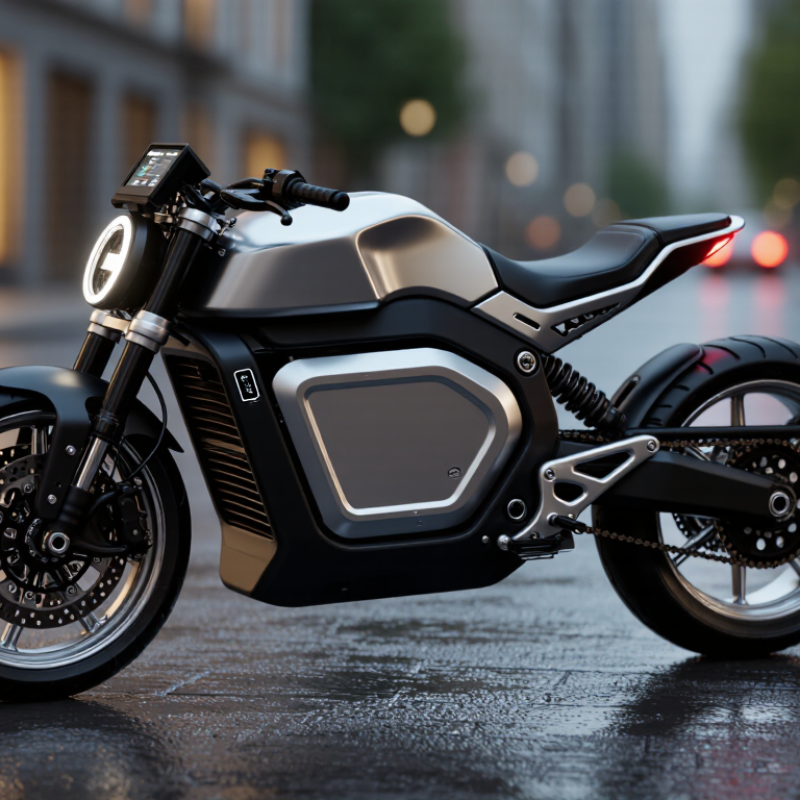
A premium electric motorbike should meet measurable standards, not rely on polished styling. A 10–20 kWh battery offers useful energy for longer urban trips and highway riding. However, advertised capacity is not always fully usable. Check the usable kWh figure, charging time, cooling system, and battery warranty.
A top speed above 100 km/h supports safer overtaking and steadier highway travel. Yet speed alone does not define quality. Inspect acceleration, suspension control, braking feel, and stability at higher speeds. ABS should be fitted to both wheels, with predictable intervention during sudden braking. Test the brakes on dry, clean pavement if permitted. Small details matter.
Tips: Ask for independent test data, not only showroom claims. Compare real-world range at moderate and high speeds. Look for clear service intervals and accessible technical support. Bring a checklist. It prevents emotional decisions.
I also consider weight distribution and riding position, because a powerful motorbike can still feel tiring after one hour. Premium design should make control feel calm, not dramatic. Some specifications remain difficult to verify, especially range in cold weather. That is a weakness worth admitting. A careful buyer should leave room for uncertainty and judge the complete riding experience.
| Evaluation Dimension | Premium Benchmark | Recommended Target | Why It Matters | What to Verify |
|---|---|---|---|---|
| Battery Capacity | 10–20 kWh lithium-ion battery | 12–18 kWh usable capacity | Provides practical range without excessive weight and cost. | Check whether the quoted capacity is nominal or usable, and review the battery warranty. |
| Real-World Range | Approximately 150–250 km in mixed riding | At least 180 km under the intended riding conditions | Range is affected by speed, temperature, rider weight, terrain, and wind. | Ask for independent test results and distinguish urban range from highway range. |
| Top Speed | 100 km/h or higher | 120–160 km/h for highway-capable use | Supports safe overtaking and stable travel on faster roads. | Confirm whether the figure is electronically limited and whether it applies at full battery charge. |
| Motor Output | 30–80 kW peak output | At least 40 kW peak and 20 kW continuous output | Peak power improves acceleration, while continuous power supports sustained performance. | Compare both peak and continuous ratings instead of relying on peak power alone. |
| Braking System | Hydraulic disc brakes with dual-channel ABS | ABS on both wheels with selectable riding modes | ABS helps reduce wheel lock during emergency braking, especially on uneven or wet surfaces. | Confirm that ABS operates on both front and rear wheels and can be tested safely. |
| Charging Performance | 3–6 kW onboard AC charger; optional DC fast charging | 20–80% AC charging in approximately 2–4 hours | Shorter charging times improve daily usability and touring convenience. | Check charging time, connector type, circuit requirements, and whether DC charging is supported. |
| Battery Protection | Integrated battery-management system with thermal monitoring | Cell balancing, over-current protection, and liquid or advanced air cooling | Thermal and electrical controls support safety, performance, and battery life. | Look for temperature sensors, diagnostic alerts, and documented safety certifications. |
| Weather Resistance | Sealed motor and battery enclosure | Battery protection rated around IP67 or better | Protects critical electrical components from dust and temporary water immersion. | Verify the rating for the battery, motor, charger, and complete vehicle separately. |
| Suspension and Handling | Adjustable front and rear suspension | Adjustable preload at minimum, with rebound adjustment preferred | Allows the rider to adapt comfort and stability to load, road quality, and riding style. | Inspect adjustment range and test the motorcycle with normal rider and passenger loads. |
| Safety and Connectivity | Traction control, riding modes, LED lighting, and connected diagnostics | At least three riding modes plus traction-control adjustment | Electronic controls improve confidence across rain, traffic, and changing road conditions. | Check whether safety features are standard, configurable, and available without a subscription. |
| Ownership Support | Documented battery warranty and accessible service diagnostics | At least 5 years or 50,000 km of battery coverage, subject to local terms | Long-term support can be as important as acceleration and range. | Review warranty exclusions, replacement costs, software support, and local technician availability. |
Note: Actual range, charging time, performance, and warranty coverage vary with battery chemistry, temperature, speed, load, charging equipment, and local regulations.
A practical premium range is about 150–250 Wh/kg. Higher density can reduce battery weight and improve handling. Bigger numbers are not automatically better.
Ask for the complete-pack rating. Cell-only figures can hide housing, cooling parts, wiring, and safety systems. That difference matters.
It may be, but testing details matter. Ask about charge depth, temperature, and capacity remaining after testing. Without this evidence, the number is difficult to judge.
Heavy loads, hot roads, and repeated rapid charging can shorten battery life. Moderate temperatures help. I would keep some range in reserve, though that is not always convenient.
Look for effective cooling, protection software, sealed connectors, and clear fault warnings. The battery should remain stable during steep climbs and repeated charging.
It addresses electric powertrain safety, insulation, shock protection, battery risks, and charging-related hazards. Request approval documents and the exact tested vehicle variant. A general statement is insufficient.
The first 6 means dust-tight construction. The second 7 covers temporary immersion, commonly up to one metre for 30 minutes. It does not support pressure washing or permanent underwater use.
Check cable routing near the steering head, battery mounting, connector seals, and visible corrosion. Review warranty, repair access, and replacement cost. Perfect ratings cannot replace maintenance.
Choosing a premium electric motorbike means looking beyond styling and headline power figures. Start with practical benchmarks: a battery of around 10–20 kWh, a top speed above 100 km/h, and a reliable ABS system. Battery quality also matters, so compare energy density, ideally in the 150–250 Wh/kg range, along with a rated lifespan of more than 2,000 charge cycles. These specifications can help indicate strong performance, useful weight management, and long-term value.
Real-world usability should be evaluated through WMTC testing and the battery’s usable kWh rather than advertised capacity alone. Charging performance is another key consideration: look for compatibility with IEC 61851, 3–6 kW AC charging, and a suitable fast-charging option when available. Finally, assess structural safety and weather resistance through UN R136 compliance and IP67 protection. By reviewing these measurable standards together, buyers can select a premium electric motorbike that balances speed, range, charging convenience, durability, and everyday confidence.

