0%

Choosing a French electric motorcycle is not simply a matter of picking the largest battery or the sleekest frame. Your real decision starts with the ride: a weekday commute through Lyon, a steep climb outside Grenoble, or a longer weekend route with fewer charging stops. Range, charging time, weight, seat height, and after-sales support all matter. Some brochure figures look reassuring. Your own route may tell a different story.

The International Energy Agency’s Global EV Outlook 2024 reports that nearly 10 million electric two- and three-wheelers were sold worldwide in 2023. That figure shows the category’s scale, but it does not guarantee that every model suits French roads or everyday use. Compare tested range with your regular distance, then check battery warranty, local servicing, and whether you can charge securely at home or work. Small details count. A heavy battery is noticeable in a tight parking space.

IEA Executive Director Fatih Birol has described the wider shift with the words, “The age of clean energy is here.” For a buyer, that ambition still needs a practical test: does the motorcycle fit your daily life? This guide explains how to make that judgment, compare costs, and assess safety and comfort before choosing a French electric motorcycle. Be cautious with estimates; weather, speed, hills, and passenger weight can reduce usable range. No single model wins for everyone. Even careful research leaves room for doubt, so a test ride is worth the time.
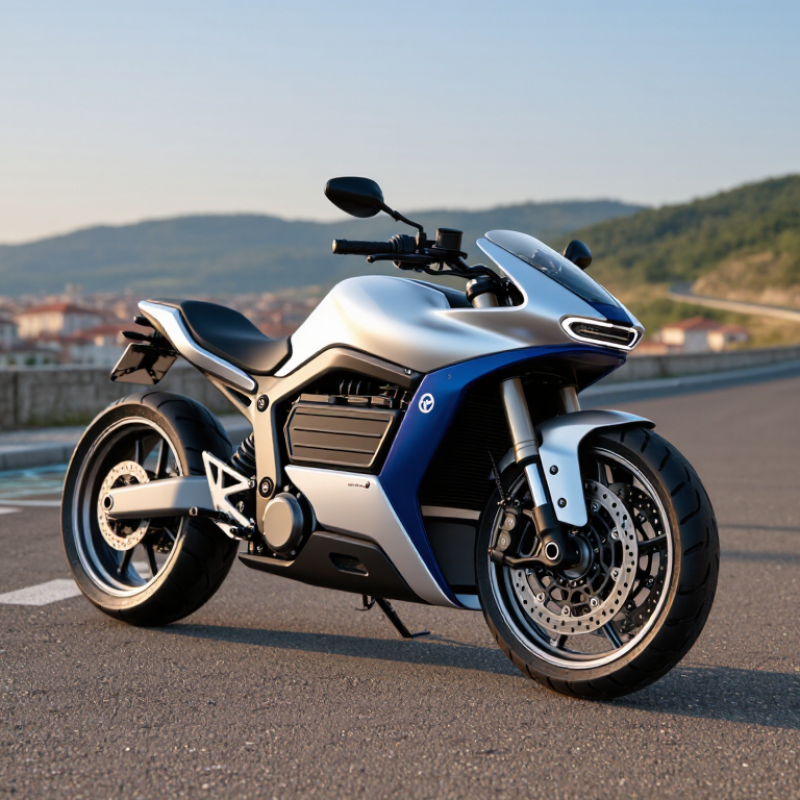
How to Choose a French Electric Motorcycle?

Confirm EU L-category approval under Regulation (EU) No 168/2013

When choosing an electric motorcycle in France, check its EU L-category approval before comparing range or styling. Regulation (EU) No 168/2013 establishes the framework for type approval of many two- and three-wheel vehicles. A road-going motorcycle is commonly classified as L3e, while some lower-powered vehicles fall under L1e. Do not rely on a sales label alone.

Ask the seller for the vehicle’s EU Certificate of Conformity, or CoC. Check that its type, variant, version, and VIN match the motorcycle and its identification plate. The CoC should show the approved category and technical details, such as maximum continuous power. Small differences matter. A model name on a brochure is not proof of approval.

Before paying a deposit, confirm that the documents can support French registration. For an imported motorcycle, ask what approval documents are available and whether additional checks may be needed. Requirements can depend on the vehicle and its history, so confirm uncertain cases with the relevant French authority or a qualified registration professional. I would not treat a tidy brochure as evidence; paperwork is sometimes less tidy. If the seller cannot provide clear documents, pause and investigate.

Match power to France’s A1 limits: 11 kW and 0.1 kW/kg

For an A1-eligible electric motorcycle in France, check its homologated continuous rated power and power-to-weight ratio. EU Regulation 168/2013 sets ceilings of 11 kW and 0.1 kW/kg. Peak power in an advert is not the same as continuous rated power.

At exactly 11 kW, the ratio limit implies a regulatory vehicle mass of at least 110 kg. Treat that as a screening calculation, not a substitute for checking the vehicle’s certificate of conformity and mass definition. I still find peak-power figures tempting, but they can distract from the figures that determine A1 eligibility. The IEA’s Global EV Outlook 2024 reports more than 9 million electric two- and three-wheelers sold worldwide in 2023, around 15% of sales in those categories. That signals a growing market, not proof that any particular model suits French roads.

Tips: Ask for the homologation documents before paying. Compare continuous power, listed mass, and usable range; then test the motorcycle on your usual route, including a hill if possible. A short ride may not reveal everything. Check twice.

Compare WMTC range claims with your daily distance and charging access

How to Choose a French Electric Motorcycle?

A WMTC range figure gives you a consistent starting point, but it is not a guarantee of everyday distance. The test uses a defined riding cycle; your route may include faster roads, hills, traffic, and frequent stops. Cold weather and extra luggage can also reduce usable range. That gap matters.

Estimate your normal round trip, then add distance for errands or an unexpected detour. Compare that total with the claimed WMTC range, leaving a practical reserve rather than planning to arrive nearly empty. A 35-kilometre commute each way needs more than 70 kilometres of comfortable real-world range. If possible, check owner reports for similar temperatures and routes; treat isolated claims cautiously.

Tips: Map your route and note where you can charge. Check whether your home parking has a suitable outlet, and ask about workplace charging before relying on it. Confirm charging time and connector details in the specification sheet. Keep a buffer. I would also test the route before making a decision, if a dealer offers a suitable demonstration ride. One short trial cannot represent every season, though.

How to Choose a French Electric Motorcycle?

Compare the WMTC range claim with your daily round-trip distance and charging access. These are illustrative planning scenarios, not French travel statistics or specifications for particular motorcycles. The “planning target” is calculated as 1.5 times the daily distance to leave a range buffer.

How to use this: Check that a motorcycle’s WMTC range claim meets or exceeds your planning target. WMTC is a standardized test figure, not a guarantee of real-world range; speed, temperature, terrain and load can affect range. Reliable home or workplace charging can make regular use more convenient, while public-only charging requires more planning.

Check 230 V charging compatibility, charge time, and connector type

Before choosing a French electric motorcycle, check that its supplied charger works with a standard 230 V household outlet. CENELEC’s EN 50160 standard sets 230 V as the nominal low-voltage supply in Europe, but outlet shape and circuit capacity still matter. French homes commonly use Type E sockets; the motorcycle may use a different connector at the vehicle end. Ask whether the charging cable is included, and verify both ends before buying. Small detail. It can spoil a trip.

Estimate charging time using usable battery capacity divided by charging power. A 4.5 kWh battery charging at 2.3 kW takes about two hours in ideal conditions; conversion losses and a lower onboard-charger limit can extend that time. Check the manual for the motorcycle’s maximum AC input, then compare it with the charger rating. A higher-rated wall outlet cannot make a bike charge faster than its onboard system allows. I still double-check the cable label.

Public charging access may also influence your choice. The International Energy Agency’s Global EV Outlook 2024 reports that public charging points grew by more than 40% worldwide in 2023. That growth does not guarantee every station fits a motorcycle. Confirm whether it accepts the bike’s connector, or whether an approved adapter is required. Never assume a cable will reach the socket where you park.

How to Choose a French Electric Motorcycle? - Check 230 V charging compatibility, charge time, and connector type

Check Reference or example What to verify before buying
French household supply Nominal single-phase supply: 230 V, 50 Hz. Confirm that the motorcycle’s supplied charger accepts 230 V AC and the local supply frequency.
Household outlet connector French domestic outlets commonly use Type E sockets. Check that the charger’s mains plug fits the available outlet, or that an approved compatible cable is supplied. Do not assume every motorcycle uses the same plug.
AC charging connector Type 2 (IEC 62196-2) is widely used for AC charging in Europe. Confirm that the motorcycle has a Type 2 inlet or an approved charging solution for Type 2 stations. Some motorcycles use a different or manufacturer-specific vehicle connector.
Charging current and input power At 230 V: 8 A ≈ 1.84 kW; 10 A ≈ 2.30 kW; 16 A ≈ 3.68 kW. Use the lower of the charger’s maximum current, the motorcycle’s onboard-charger limit, and the circuit’s permitted capacity. A socket rating alone does not confirm that a circuit is suitable for prolonged charging.
Illustrative charge time: 5 kWh battery About 3.0 h at 8 A; 2.4 h at 10 A; 1.5 h at 16 A. These estimates assume 90% charging efficiency and a constant charging rate. Actual time varies with the charger, battery, temperature, and charging profile.
Illustrative charge time: 10 kWh battery About 6.0 h at 8 A; 4.8 h at 10 A; 3.0 h at 16 A. Compare the battery’s usable capacity with the charger’s actual AC input power, not just the outlet’s maximum rating.
Illustrative charge time: 15 kWh battery About 9.1 h at 8 A; 7.2 h at 10 A; 4.5 h at 16 A. Allow extra time for charging losses and for a reduction in charging rate near a full battery.
Charge-time calculation Estimated hours = battery capacity (kWh) ÷ [230 V × current (A) ÷ 1,000 × 0.90]. The 0.90 factor is an illustrative efficiency assumption, not a guaranteed value for a specific motorcycle or charger.
Safety and installation Charging performance depends on the outlet, wiring, protective devices, charger, and motorcycle. Follow the motorcycle and charger instructions. Have the circuit assessed by a qualified electrician if its condition or suitability is uncertain; avoid unapproved adapters or extension leads.

Note: Charge-time figures are calculated examples, not model specifications. Always check the motorcycle’s manual for its approved supply voltage, maximum AC charging power, connector, and charging instructions.

Assess battery warranty and UN 38.3 transport-test documentation

When choosing a French electric motorcycle, read the battery warranty before comparing range figures. Check its duration, mileage limit, and the capacity threshold for a claim. A warranty covering eight years may sound reassuring, but exclusions for storage, charging habits, or maintenance can narrow that promise. Ask how a fault is diagnosed and who pays for shipping or inspection. Keep the purchase invoice and service records together; they may matter more than a confident sales conversation.

Transport paperwork deserves equal attention. Request the UN 38.3 test summary for the exact battery model fitted to the motorcycle. The document should identify the manufacturer, battery type, and test information clearly. A similar-looking pack is not enough. Match its model or part number against the battery label and sales documents. UN 38.3 concerns transport testing; it does not, by itself, prove road approval or long-term durability.

Check before paying. If a seller cannot provide the test summary, ask when it will be available and get the answer in writing. Also confirm that replacement batteries retain matching documentation. These details can feel tedious beside a polished showroom bike. I might overlook them too, especially after a short test ride. But paperwork gaps are easier to address before delivery than when a carrier asks for documentation.

FAQS

What power figures matter for an A1 electric motorcycle in France?

Check homologated continuous rated power and power-to-weight ratio. The limits are 11 kW and 0.1 kW/kg. Peak power alone can mislead.

What does the 110 kg figure mean at 11 kW?

At exactly 11 kW, the ratio points to at least 110 kg of regulatory vehicle mass. Treat this as a screening check, not a final decision.

Which documents should I check before buying?

Ask for the certificate of conformity. Compare its continuous power and listed mass. I still find advertised peak figures tempting, so I check twice.

How can I tell whether charging at home will work?

Check whether the supplied charger supports a standard 230 V household outlet. Also confirm the cable reaches the socket where you park. Small detail.

Do the outlet and motorcycle connector need to match?

French homes commonly use Type E sockets, but the vehicle may have another connector. Confirm both cable ends and ask whether the cable is included.

How can I estimate charging time?

Divide usable battery capacity by charging power. A 4.5 kWh battery at 2.3 kW takes about two hours under ideal conditions.

Why might charging take longer than that estimate?

Conversion losses or a lower onboard-charger limit can add time. Check the manual’s maximum AC input; a more powerful outlet cannot bypass that limit.

What should I check before relying on public charging?

Confirm the station accepts the motorcycle’s connector or an approved adapter. Check cable reach, too. More stations do not guarantee an easy fit.

How can I judge whether the motorcycle suits my usual rides?

Compare continuous power, listed mass, and usable range, then test your regular route. Include a hill if possible. A short ride may miss things.

Conclusion

Choosing a French electric motorcycle starts with checking that it has the appropriate EU L-category approval under Regulation (EU) No 168/2013. If you plan to ride with an A1 licence, compare the motorcycle’s rated power and power-to-weight ratio with the applicable limits: 11 kW and 0.1 kW/kg. These checks help ensure the model fits your intended use and licence category.

Next, judge the claimed WMTC range against your typical daily distance, allowing for the journeys and conditions you expect, and consider whether charging is convenient at home or elsewhere. Confirm compatibility with a standard 230 V supply, the connector type, and the time needed for a practical charge. Before buying, review the battery warranty and ask for UN 38.3 transport-test documentation. Together, these points provide a straightforward basis for comparing options and choosing a motorcycle that suits your routine.

Oliver

Oliver

Oliver is a professional marketing specialist who combines a deep understanding of the company’s products with a clear, practical approach to communication. He regularly contributes expert articles to the company website, helping readers understand product features, compare available solutions, and......