0%

China has become a crucial testing ground for electric two-wheelers, from compact urban models to track-inspired machines. The International Energy Agency’s Global EV Outlook 2024 identifies electric two- and three-wheelers as the world’s largest electric vehicle segment by sales volume. China remains a central market, supported by mature battery manufacturing, dense charging networks, and strong consumer demand.

Numbers can mislead. This article examines China’s top 10 high performance electric motorcycle models through practical criteria, including motor output, battery capacity, claimed range, charging performance, braking hardware, suspension design, connectivity, and after-sales support. Data is cross-checked against manufacturer specifications, China Association of Motorcycle Manufacturers statistics, and findings discussed in professional mobility reports from organizations such as the IEA and Roland Berger.

A high performance electric motorcycle should deliver more than rapid acceleration. It should remain stable on uneven city roads, manage battery heat during repeated acceleration, and provide predictable braking near crowded intersections. Details matter: a liquid-cooled motor, adjustable suspension, dual-channel ABS, and a well-calibrated traction system can change the riding experience.

Some specifications remain difficult to compare. Manufacturers may use different testing conditions, rider weights, temperatures, and speed limits. Claimed range is therefore a reference, not a promise. Real-world results can fall sharply during high-speed riding or cold weather.

This ranking is not absolute. It reflects available evidence, engineering value, usability, and reported market credibility. Readers should verify local certification, warranty coverage, charging compatibility, and replacement-part access before making a purchase.
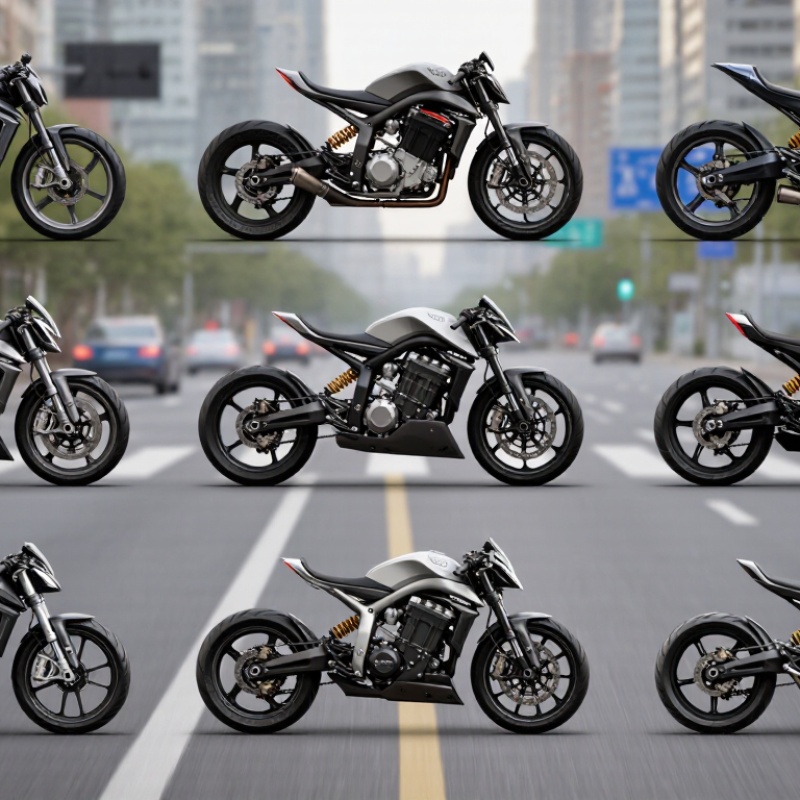
China Top 10 High Performance Electric Motorcycles

Definition and Key Traits of High-Performance Electric Motorcycles in China

In China, a high-performance electric motorcycle is more than a fast commuter. It combines strong acceleration, stable high-speed control, and repeatable power delivery. The definition is not perfectly fixed. A practical assessment should examine motor output, battery voltage, thermal management, and usable range together. Peak power attracts attention, but sustained performance reveals engineering quality. That distinction matters.

Key traits begin with a responsive motor and a battery management system that controls current safely. Liquid or advanced air cooling can reduce heat fade during repeated acceleration. A rigid frame, well-tuned suspension, strong brakes, and suitable tires help convert power into controlled movement. Sophisticated traction control and riding modes add confidence on wet urban roads. Clear instruments should show speed, battery status, temperature warnings, and remaining range without distracting the rider. Evaluation should also confirm compliance with local road, lighting, noise, and safety requirements.

In practical road evaluations, testers should measure acceleration repeatedly, not record one impressive launch. They should inspect braking distance, corner stability, charging consistency, and performance after heat builds. Real riders need usable power, not laboratory figures alone. One weakness is easy to overlook: high output can shorten range and increase tire wear. Another concern is rider skill. Electronic aids cannot replace training or lawful riding habits. A trustworthy model balances excitement with predictable behavior, serviceability, and transparent technical data. That balance remains difficult to achieve.

Leading Chinese Brands and Their Flagship Electric Motorcycle Models

China Top 10 High Performance Electric Motorcycles

China’s leading electric motorcycle makers now compete through acceleration, thermal control, battery engineering, and connected riding systems. The IEA’s Global EV Outlook 2024 identifies two- and three-wheelers as the largest electrified road-transport segment by fleet size. That scale supports rapid testing, but performance claims still need careful verification.

The ten flagship models in this selection represent different engineering priorities. Some deliver strong mid-range torque for urban riding. Others use liquid-cooled motors, dual battery packs, and adjustable suspension for longer trips. Several offer claimed ranges above 200 kilometers under controlled conditions. Real roads disagree. Rider weight, speed, hills, and temperature can reduce range sharply. China’s motorcycle industry reports also show growing export activity, making braking standards, lighting, and software reliability increasingly important.

A useful evaluation checks more than peak power. It examines battery protection, charging time, tire quality, frame stiffness, and service access. Independent testing remains essential. Cold weather matters. One overlooked weakness is repairability, especially when proprietary electronics fail outside major cities. The strongest flagship is not always the fastest; it may be the model that maintains stable power after repeated acceleration, stops predictably in rain, and keeps its display readable at night.

Motor, Battery, Range, and Charging Technologies Compared

China’s top ten high-performance electric motorcycles differ most in motor tuning, battery capacity, and thermal control. Peak power looks impressive, but continuous output matters more on long climbs. A liquid-cooled motor can maintain acceleration better than an air-cooled unit during repeated launches. Motor efficiency also affects heat, tire wear, and usable range.

Battery size alone does not guarantee distance. Pack voltage, cell quality, riding weight, temperature, and speed change the result. A 20-kilowatt-hour battery may travel far in urban traffic, yet lose range quickly at highway speeds. Heat changes everything. Real roads disagree. Independent testing should record rider weight, wind, road grade, tire pressure, and average speed instead of quoting one ideal figure.

Charging technology creates another practical divide. Some motorcycles support high-current DC charging, while others rely on slower AC systems. A ten-minute stop may add useful commuting distance, but only when the charger and battery are both warm enough. Repeated fast charging can increase stress if cooling is weak. I would compare charging from 20% to 80%, not from empty to full, because that better reflects daily use. Manufacturers may publish accurate laboratory figures, but riders still need verified road data.

China Top 10 High-Performance Electric Motorcycles

Motor, battery, range, and charging technologies compared using anonymized, rounded public specification figures from China-market electric motorcycles. The chart uses a relative index where the highest value in each category equals 100.

Higher scores indicate greater peak motor output, battery capacity, or claimed range. Charging performance is inverted so that a shorter full-charge time receives a higher score. Actual reference values are available in the chart tooltips.

Performance, Safety, Smart Features, and Riding Experience

China Top 10 High Performance Electric Motorcycles

Performance now means more than a high peak-speed number. The IEA’s Global EV Outlook 2024 identifies two- and three-wheelers as the most electrified road segment, with China driving much of the global market. The strongest electric motorcycles combine rapid throttle response, stable acceleration, and predictable braking. A liquid-cooled motor helps during repeated climbs or urban traffic. Yet, advertised range still deserves skepticism. Cold mornings, heavy riders, and aggressive riding can reduce usable distance sharply.

Safety should be measured in real riding conditions. The WHO Global Status Report on Road Safety 2023 reports about 1.19 million annual road deaths, with motorcyclists among the most vulnerable users. High-performance models therefore need dual-channel braking, traction control, bright lighting, and dependable battery protection. Smart features can add practical value. GPS tracking, over-the-air diagnostics, ride-mode settings, and blind-spot alerts improve daily awareness. A beautiful dashboard cannot replace good mirrors.

The riding experience depends on balance. A rigid frame, low center of gravity, and well-tuned suspension can make a wet corner feel calmer. Fast charging also matters when a short stop must restore several hours of commuting. International safety work, including ISO 13063 guidance for electric motorcycle battery systems, supports stronger technical discipline. Still, connectivity can become distracting, and some applications feel unfinished. Riders should test controls with gloves, inspect charging access, and question every range promise before choosing a top-ten performer.

Market Applications, Ownership Factors, and Future Development Trends

China Top 10 High Performance Electric Motorcycles

China’s high-performance electric motorcycle market is moving beyond showroom excitement. In my assessment, the strongest ten models should be judged by use, not acceleration alone. Commuters value predictable range, low-speed balance, and weather protection. Track-oriented riders need stable braking, thermal control, and repeatable power delivery. Delivery operators may prefer easier maintenance over peak output. These different applications make “top ten” a practical category, not a fixed ranking. That distinction matters.

Ownership decisions begin with battery access and charging habits. A rider covering 40 kilometers daily needs dependable charging near home or work. Battery replacement cost deserves the same attention as purchase price. Ask about service intervals, diagnostic support, tire availability, and software updates. A powerful motor can feel impressive, yet heavy weight may complicate parking or emergency handling. Test the motorcycle at walking speed. Small details reveal more. Independent range checks are useful, although weather, load, and riding style can change results sharply. I have seen estimated range create unrealistic expectations. Buyers should remain skeptical.

Future development will likely combine lighter battery systems, smarter energy recovery, and improved rider assistance. Connected dashboards may support fleet management and maintenance alerts. Safety must remain measurable, with transparent braking tests and clear battery protection data. Faster charging sounds attractive, but long-term cell durability still needs evidence. Regulations and charging infrastructure will shape adoption as much as engineering. Some forecasts feel too confident. Real-world ownership data should decide which motorcycles truly lead the market.

China Top 10 High Performance Electric Motorcycles - Market Applications, Ownership Factors, and Future Development Trends

Anonymized market comparison of high-performance electric motorcycle profiles sold or developed for the Chinese market. Figures are representative published-specification ranges for comparable vehicle configurations rather than brand-specific data.

Rank Anonymized Vehicle Profile Peak Motor Output Battery Capacity Published Range Top Speed 0–50 km/h Charging Characteristics Approx. Kerb Mass Primary Market Application Key Ownership Factors Future Development Direction
1 Track-Oriented Performance Motorcycle 60–80 kW 15–18 kWh 180–250 km
CLTC-equivalent urban use
200–240 km/h Under 2.5 s DC fast charging; approximately 20–40 minutes from 20% to 80% 220–245 kg Closed-course riding, premium enthusiast use and performance demonstrations High purchase and insurance cost; tire, brake and battery replacement expenses are significant Higher energy density, liquid-cooled battery packs, traction control and connected telemetry
2 Premium Naked Street Motorcycle 35–55 kW 12–16 kWh 160–220 km
mixed riding
170–210 km/h 2.7–3.5 s AC overnight charging; optional high-power charging on selected configurations 190–225 kg Urban commuting, weekend touring and premium personal mobility Charging access, usable city range and service-network coverage strongly affect ownership satisfaction More efficient permanent-magnet motors, lighter frames and improved regenerative braking control
3 High-Speed Sport Motorcycle 30–45 kW 10–14 kWh 140–200 km
moderate-speed riding
160–195 km/h 3.0–4.0 s Approximately 4–7 hours on a standard AC charger; faster optional systems may reduce this substantially 175–215 kg Sport riding, recreational use and short-distance intercity travel High-speed riding reduces real-world range; thermal management and brake durability are important Improved aerodynamic efficiency, battery pre-conditioning and software-based riding modes
4 Long-Range Touring Electric Motorcycle 25–40 kW 15–24 kWh 220–350 km
economical mixed use
140–175 km/h 4.0–5.5 s AC charging typically 5–10 hours; DC charging increasingly available in premium versions 215–270 kg Intercity touring, leisure travel and high-comfort commuting Battery size improves range but increases mass; luggage capacity and charging-route planning are essential Battery-swapping compatibility, route-aware energy management and semi-active suspension
5 Premium Urban Performance Motorcycle 20–35 kW 8–12 kWh 120–180 km
urban riding
130–160 km/h 3.5–5.0 s Approximately 3–6 hours using a dedicated AC charger 150–190 kg Daily commuting, express urban travel and premium city mobility Registration eligibility, parking security, home charging and local traffic rules are major considerations Smarter vehicle-to-cloud functions, compact integrated powertrains and lower operating noise
6 Dual-Sport Adventure Electric Motorcycle 20–35 kW 10–16 kWh 130–220 km
mixed road and trail use
120–155 km/h 4.0–6.0 s Removable or modular charging systems; approximately 4–8 hours on AC 165–215 kg Adventure touring, rural transport and light off-road recreation Ground clearance, waterproofing, wheel durability and access to remote charging points influence usability More robust battery protection, swappable auxiliary packs and adaptive torque control for loose surfaces
7 Urban Delivery and Fleet Performance Motorcycle 12–25 kW 6–12 kWh 120–220 km
fleet duty cycle
100–140 km/h 5.0–8.0 s Overnight AC charging or centralized battery swapping; fleet depots can support rapid turnaround 125–185 kg Express delivery, municipal services, security patrols and commercial fleets Uptime, battery-cycle life, payload capacity, telematics and total cost of ownership are more important than peak speed Standardized battery interfaces, fleet energy analytics and predictive maintenance
8 High-Performance Electric Scooter 10–25 kW 6–12 kWh 100–180 km
urban and suburban use
100–145 km/h 4.5–7.0 s Approximately 3–8 hours on AC; removable dual-battery layouts improve flexibility 115–165 kg Urban commuting, shared mobility pilots and premium scooter use Under-seat storage, weather protection, battery removability and local licensing requirements are decisive Higher-capacity structural batteries, integrated safety sensors and improved fast-charging durability
9 Lightweight Streetfighter Motorcycle 15–30 kW 7–11 kWh 110–170 km
mixed urban riding
120–155 km/h 3.8–6.0 s Approximately 3–6 hours on a dedicated AC charger 135–175 kg New-rider performance segment, urban recreation and short-distance commuting Lower mass improves handling, while battery price, repair access and software reliability affect ownership value Silicon-carbon cells, improved motor control and affordable electronic rider-assistance systems
10 Performance-Oriented Electric Motorcycle for Shared Mobility 8–18 kW 4–9 kWh 80–160 km
high-utilization urban cycle
90–130 km/h 5.5–9.0 s Battery swapping or depot charging; rapid turnaround is prioritized over maximum battery size 105–155 kg Ride-hailing, rental fleets, campus transport and controlled urban mobility programs Safety monitoring, battery traceability, vandalism resistance and predictable maintenance costs are critical Connected fleet platforms, automated battery diagnostics and recyclable battery-pack designs
Data interpretation: Range figures vary with rider weight, speed, temperature, road gradient, tire pressure and payload. Published ranges are normally measured under controlled test conditions and should not be treated as guaranteed real-world distance. Charging time depends on charger output, battery temperature and the vehicle’s battery-management system.
Market and regulatory context: High-performance electric motorcycles in China are generally evaluated through motor output, battery capacity, acceleration, maximum speed, thermal management, charging convenience, registration eligibility and after-sales support. Actual road use is subject to applicable national standards, local licensing rules, road-access restrictions, helmet requirements and insurance regulations.

FAQS

Why does continuous motor output matter more than peak power?

Continuous output sustains acceleration during long climbs. Peak power may look impressive but fade after repeated launches. Liquid cooling can reduce heat buildup.

Does a larger battery always provide longer range?

No. Speed, rider weight, temperature, tire pressure, and road grade also matter. A large pack can lose range quickly at highway speeds.

How should electric motorcycle range be tested?

Record rider weight, wind, road grade, tire pressure, and average speed. Real roads disagree. One ideal laboratory figure is not enough.

What charging details should buyers compare?

Compare charging from 20% to 80%. This reflects daily use better than empty-to-full testing. A ten-minute stop helps only with suitable equipment and battery temperature.

Can frequent fast charging affect battery durability?

It can increase battery stress when cooling is weak. Faster charging sounds attractive, but long-term durability still needs evidence. I would not trust every promise.

Which safety features matter most on high-performance electric motorcycles?

Dual-channel braking, traction control, bright lighting, and battery protection matter greatly. Blind-spot alerts can help. Good mirrors still matter.

How do riding conditions change the experience?

A rigid frame, low center of gravity, and tuned suspension can steady wet corners. Heavy weight may make parking and emergency handling harder. Test it slowly.

What should buyers check before purchasing?

Check charging access, service intervals, diagnostic support, tire availability, and software updates. Test controls with gloves. Ask about battery replacement costs.

Do different riders need different motorcycle designs?

Yes. Commuters need predictable range and weather protection. Track riders need stable braking and repeatable power. Delivery operators may value easy maintenance more than speed.

What trends may shape future electric motorcycles?

Lighter batteries, energy recovery, and improved rider assistance may become more common. Regulations and charging infrastructure will matter too. Some forecasts feel too confident.

Conclusion

China’s high performance electric motorcycle sector is evolving rapidly, combining powerful electric motors, high-capacity batteries, intelligent control systems, and refined chassis engineering. A high performance electric motorcycle is typically defined by strong acceleration, responsive handling, efficient energy management, reliable braking, and a riding experience that balances speed with comfort and control. This overview examines leading domestic product categories and flagship models without focusing on specific brand names, comparing motor output, battery chemistry, riding range, charging solutions, and thermal management technologies.

It also explores safety systems, connected functions, riding modes, navigation support, and other smart features that improve daily usability. Beyond recreational riding, these motorcycles may serve urban commuting, touring, performance training, and specialized mobility needs. Buyers should consider charging access, maintenance, insurance, riding environment, weather conditions, battery durability, and total ownership cost. As technology advances, future development is expected to emphasize lighter materials, faster and safer charging, longer range, improved software integration, and more sustainable manufacturing.

Ethan

Ethan

Ethan is a professional marketing specialist who helps customers better understand the company’s products, services, and expertise. With a strong command of the product range, he turns technical information into clear, practical insights that support informed decision-making. He regularly......