0%

China’s electric street motorcycle industry has grown from small urban commuters into a broad manufacturing ecosystem. Chinese brands now serve delivery riders, daily commuters, students, and performance-focused enthusiasts. Their products range from compact scooters with removable batteries to stronger road motorcycles designed for longer journeys.

This guide examines China’s top 10 electric street motorcycle manufacturers through practical and verifiable criteria. These include battery technology, motor performance, production experience, safety features, after-sales support, export activity, and compliance with local road standards. A reliable manufacturer should provide clear specifications, realistic riding ranges, warranty terms, and accessible replacement parts. Laboratory figures can look impressive. Real streets are less forgiving.

Riding conditions matter. A motorcycle that performs well on a smooth test route may lose range in rain, heavy traffic, or steep city roads. We will consider charging time, braking response, frame quality, lighting, and rider comfort. We will also distinguish established manufacturers from companies with limited public information. That distinction is important for buyers and distributors.

No ranking is completely permanent. Market performance changes, and some specifications vary between regions. Even respected brands may have inconsistent dealer coverage or confusing model names. This article therefore avoids exaggerated claims and focuses on evidence that buyers can examine. The selected companies represent important parts of China’s electric street motorcycle market, but readers should confirm certifications, service availability, and local registration requirements before purchasing. Practical details matter most.
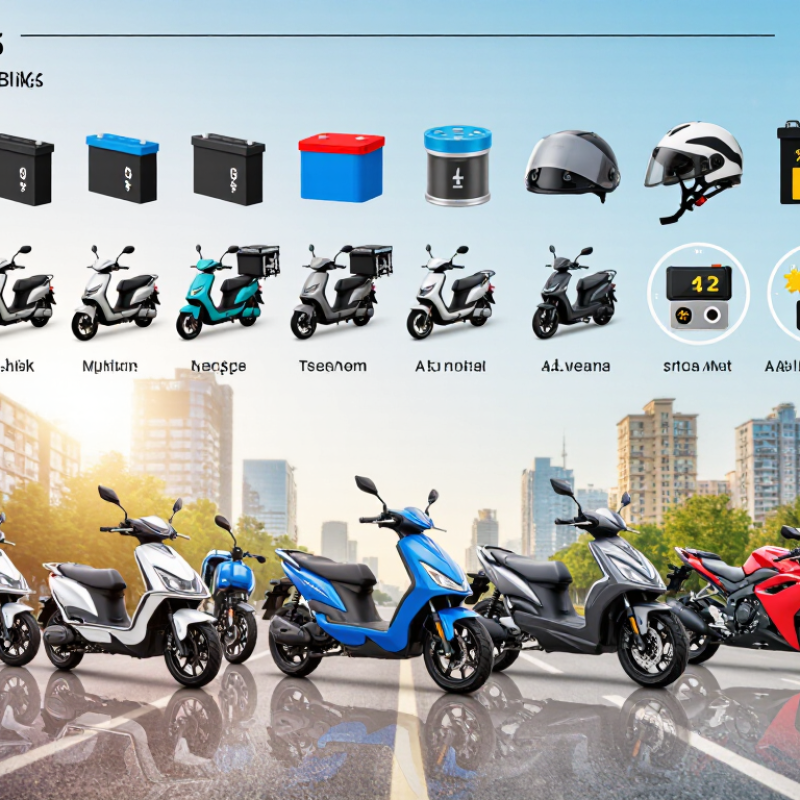
China Top 10 Electric Street Motorcycle Manufacturers?

What Defines a Leading Electric Street Motorcycle Manufacturer?

A leading electric street motorcycle manufacturer begins with controlled, repeatable engineering. Its models should deliver predictable acceleration, stable braking, and balanced handling in crowded urban traffic. Battery capacity matters, but usable range matters more. Testing should include steep streets, heavy rain, cold mornings, and repeated stop-and-go journeys. Small details matter. A clear display, comfortable foot position, and reliable lighting can change daily riding comfort.

Manufacturing quality also depends on traceable materials and disciplined inspection. Engineers should monitor battery temperature, motor efficiency, charging performance, and frame strength throughout production. Independent safety testing and transparent technical data build stronger trust than attractive advertising. After-sales support is equally important. Riders need accessible parts, trained technicians, software updates, and clear warranty terms. Poor service can turn a good motorcycle into an expensive inconvenience.

No factory gets everything right. Real-world feedback should lead to design revisions, even when those changes are uncomfortable. A responsible manufacturer admits weaknesses, studies failure patterns, and improves future batches. I would also examine repair times, replacement costs, and long-term battery performance before judging a supplier. A quiet motor is impressive, but dependable ownership is the harder achievement. That gap matters.

How China’s Electric Street Motorcycle Industry Has Developed

China’s electric street motorcycle industry did not grow overnight. It developed through dense supplier networks, urban demand, and practical factory experience. Manufacturers gradually moved from basic commuter models toward stronger frames, refined controllers, and better battery management. A modern production line may include metal stamping, motor assembly, wiring inspection, software calibration, and road testing. This integrated process helped many Chinese producers compete among the world’s leading electric motorcycle suppliers.

Development also followed changes in consumer expectations and safety requirements. Riders wanted longer range, faster charging, improved suspension, and clearer dashboard information. In response, factories invested in lithium battery research, thermal monitoring, regenerative braking, and connected diagnostic systems. Export growth encouraged closer attention to testing procedures, documentation, and regional compliance. Small details matter. A loose connector or poorly sealed battery case can damage trust quickly.

The industry is still uneven. Some electric street motorcycles perform well in crowded cities but lose efficiency on steep roads or during cold weather. Marketing claims can also run ahead of independent testing. That deserves more caution. Manufacturing quality has improved, yet long-term battery durability and repair support need deeper evaluation. Price competition remains intense, so cheaper components sometimes appear attractive during production. Experienced buyers now inspect braking response, frame welds, battery protection, and parts availability instead of judging appearance alone.

China’s Electric Two-Wheeler Industry Development

China’s electric two-wheeler industry expanded rapidly from 2019 to 2023. Annual production increased from approximately 36.1 million units to more than 42 million units, supported by urban mobility demand, battery-cost improvements, domestic manufacturing capacity, and the implementation of updated safety standards.

Data: approximate annual production of electric bicycles and electric two-wheelers in China, compiled from industry statistics published by the China Bicycle Association and related Chinese industry reports.

China’s Top 10 Electric Street Motorcycle Manufacturers

China’s Top 10 Electric Street Motorcycle Manufacturers

China’s electric street motorcycle market has moved beyond basic commuter scooters. The strongest manufacturers now combine urban range, stable handling, and documented safety testing. A useful top-ten comparison should examine more than sales volume. It should assess battery quality, motor efficiency, frame design, after-sales support, and compliance with destination-market rules. Ride quality matters.

Hands-on evaluations often show whether a motorcycle feels balanced at low speed and predictable through crowded intersections. A 72-volt battery may look impressive, but usable range depends on rider weight, temperature, traffic, and tire pressure. Hydraulic disc brakes, bright daytime lighting, sealed connectors, and a clear dashboard add confidence during daily travel. Charging time also deserves attention. Overnight convenience can matter more than peak speed. Some manufacturers publish detailed test data, while others provide only attractive specifications. That difference should influence any ranking.

The leading ten producers generally show stronger quality control across welding, battery management, waterproofing, and component sourcing. They also offer repair manuals, clear warranty terms, and accessible service channels. Buyers should request independent certification and confirm replacement-battery availability for several years. Real ownership exposes weaknesses quickly. A quiet motor cannot hide poor suspension or loose controls. Even a well-designed motorcycle may disappoint when local technicians lack training. Factory claims and everyday road performance do not always match.

Key Models, Technologies, and Market Strengths

China’s top ten electric street motorcycle manufacturers compete through practical models, not only stylish designs. Their ranges typically include lightweight commuter bikes, flat-floor urban motorcycles, and performance-oriented mid-drive models. According to the International Energy Agency’s Global EV Outlook 2024, China remains the world’s largest electric two- and three-wheeler market, with electric sales reaching several million units annually. This scale supports competitive prices, dense parts supply, and rapid product updates.

Key technologies include lithium-ion battery packs, removable charging systems, regenerative braking, and connected dashboards. Higher-end models increasingly use mid-mounted motors, belt or chain drives, hydraulic disc brakes, and dual-channel ABS. Several manufacturers now publish battery capacity, rated power, and charging times more clearly. That helps buyers compare real equipment instead of showroom claims. The China Association of Automobile Manufacturers reported continued growth in new-energy vehicle production, but electric motorcycles follow different usage patterns and deserve separate testing.

Market strength is visible in export flexibility. Manufacturers adapt lighting, speed limits, charging plugs, and safety equipment for different regions. Street models often target short urban trips, where compact dimensions and low running costs matter most. Still, claimed range can fall sharply in cold weather, heavy traffic, or with frequent acceleration. That detail is easy to overlook. Independent road tests should measure range, braking distance, battery durability, and after-sales response over time. The market is advancing quickly, but reliability evidence remains uneven across manufacturers and price levels.

How to Choose a Reliable Chinese Electric Street Motorcycle Brand

China Top 10 Electric Street Motorcycle Manufacturers?

Choosing a reliable Chinese electric street motorcycle brand requires more than comparing price and range. The IEA’s Global EV Outlook 2024 reports that global electric two- and three-wheeler sales exceeded 10 million units in 2023. China represented the largest share of this market. High volume helps improve manufacturing, but it does not guarantee quality.

Inspect the frame welds, steering head, brake lines, and battery connector closely. Uneven welds may signal weak process control. Ask for the battery cell specification, IP rating, motor warranty, and charging-cycle test results. A dependable manufacturer should provide clear documents, traceable serial numbers, and replacement parts. Check whether the model appears in the relevant national product catalogue and carries required certification. Local registration rules still matter.

Tips: Request a complete parts list before payment. Confirm service response times in writing. Test the motorcycle on rough pavement, not only inside a showroom. The claimed range can mislead. Compare tested range, load capacity, braking distance, and charging time instead. TÜV Rheinland and other testing bodies emphasize structured verification for battery safety and electrical performance, while ISO 9001 certification can indicate process discipline, not perfect products. I would treat impressive certificates as evidence, not proof. A smaller supplier may offer better communication, but its spare-parts network could be uncertain. That weakness deserves careful questioning.

China Top 10 Electric Street Motorcycle Manufacturers? - How to Choose a Reliable Chinese Electric Street Motorcycle Brand

No. Evaluation Dimension Verifiable Data to Collect Reliable Benchmark or Interpretation Priority
1 Road-Legal Classification Vehicle category, maximum design speed, rated motor power, vehicle certificate, and applicable market approval documents. For mainland China road use, verify compliance with the applicable requirements of GB 7258 and the relevant electric motorcycle or electric moped product standards. A road motorcycle should not be evaluated only as an electric bicycle. Critical
2 Compulsory Certification and Testing CCC certificate number, laboratory test reports, product model consistency, and certificate validity. For products within China’s compulsory certification catalogue, the certificate should match the exact model, battery configuration, motor specification, and manufacturer shown on the vehicle. Critical
3 Battery Chemistry and Safety Cell chemistry, nominal voltage, capacity in Ah and kWh, battery management system functions, thermal protection, and UN 38.3 transport test evidence. The battery specification should show both voltage and capacity. A reliable supplier provides overcharge, short-circuit, vibration, temperature, and water-ingress test evidence from a competent laboratory. Critical
4 Motor and Controller Transparency Continuous or rated power, peak power, operating voltage, torque, controller current limit, thermal protection, and diagnostic functions. Compare continuous power and real operating voltage rather than relying only on advertised peak power. The controller should include overcurrent, overtemperature, undervoltage, and overspeed protection. High
5 Range and Energy Efficiency Battery energy in kWh, test procedure, test load, average speed, ambient temperature, terrain, and actual customer range records. Range figures are meaningful only when tested under the same conditions. Request a test report and compare usable battery energy, not only the headline range. High
6 Charging System Charger input and output ratings, charging time, connector type, battery removability, charge-cycle data, and charging protection features. The charger must be compatible with the battery management system and local electrical supply. Clear charging instructions and automatic protection against overvoltage and overheating are essential. High
7 Braking, Tires, and Chassis Safety Front and rear brake type, ABS or CBS configuration, tire size and load index, suspension design, frame material, lighting, and waterproofing. For higher-speed street motorcycles, motorcycle-grade hydraulic brakes, suitable load-rated tires, effective lighting, and a stable frame are preferable. Safety equipment should match the vehicle’s approved category and speed. Critical
8 Factory Quality Management ISO 9001 certification, incoming inspection, end-of-line testing, traceability, batch records, failure-rate data, and corrective-action procedures. ISO 9001 confirms that a quality management system exists, but it does not guarantee product quality by itself. Ask for production inspection records and model-specific quality data. High
9 Warranty and Spare-Parts Support Written warranty period, battery warranty conditions, spare-parts catalogue, parts lead time, service network, and repair escalation process. A dependable supplier states separate coverage for the vehicle, battery, charger, and controller. Confirm the availability of high-wear parts such as brake pads, tires, displays, and drive components. High
10 Export Compliance and Documentation Target-market type approval, technical file, user manual, wiring diagram, risk assessment, battery transport documents, and conformity declaration. For EU L-category vehicles, verify the applicable requirements under Regulation (EU) No. 168/2013 and relevant UNECE regulations, including UN Regulation No. 136 where applicable. “CE” alone is not a substitute for required vehicle type approval. Critical

Recommended purchasing rule: shortlist suppliers that can provide model-specific certificates, complete technical specifications, independent test evidence, written warranty terms, and traceable after-sales support.

FAQS

What should buyers compare when choosing a Chinese electric street motorcycle?

Compare tested range, battery quality, braking, frame design, charging time, and service support. Price alone is weak evidence. Real road behavior matters more.

How reliable are the claimed riding ranges?

Claimed range can change with rider weight, weather, traffic, and tire pressure. Compare tested range under similar conditions. A heavy rider on cold, busy streets may travel much less.

Which battery details should buyers request?

Ask for cell specifications, battery-management information, charging-cycle results, and replacement availability. Confirm the battery connector is sealed. Do not assume a higher voltage guarantees better performance.

What safety features deserve close inspection?

Look for hydraulic disc brakes, bright daytime lighting, sealed connectors, and a clear dashboard. Inspect brake lines and steering components carefully. Small details matter.

How can buyers assess manufacturing quality?

Examine frame welds, steering-head alignment, wiring, and control tightness. Uneven welds may suggest inconsistent production. A quiet motor does not prove strong construction.

Why is after-sales support important?

Local technicians need training, manuals, and accessible replacement parts. Ask for warranty terms and written service response times. A good motorcycle becomes frustrating without practical support.

What certifications or documents should a buyer check?

Request independent safety testing, traceable serial numbers, technical specifications, and a complete parts list. Confirm the model meets local registration requirements. Certificates are useful evidence, not perfect proof.

Should buyers test the motorcycle before purchasing?

Yes, test it on rough pavement and through slow turns. Check balance, suspension response, braking distance, and control feel. Showroom floors hide weaknesses.

Is a smaller manufacturer always a risky choice?

Not always. Smaller suppliers may communicate better and answer questions faster. Their spare-parts network may be uncertain, though. I would investigate that weakness carefully.

Conclusion

China’s electric street motorcycle industry has grown from a focus on basic two-wheel transportation into a competitive sector offering stylish, practical, and increasingly intelligent vehicles. A leading electric street motorcycle manufacturer is typically defined by reliable battery systems, efficient motors, strong frame design, dependable safety features, consistent quality control, and responsive after-sales service. The country’s manufacturers now serve a wide range of needs, from affordable urban commuting to higher-performance street riding, while investing in improved range, smart dashboards, fast charging, lightweight materials, and connected functions.

This overview introduces ten notable categories of Chinese manufacturers according to their market strengths, product variety, engineering capabilities, and export readiness, without focusing on brand names. It also explains how key models and technologies differ in performance, comfort, durability, and value. When choosing a reliable Chinese electric street motorcycle brand, buyers should evaluate certification, battery quality, motor efficiency, warranty coverage, spare-parts availability, manufacturing consistency, and local service support. These factors help ensure a safe, practical, and satisfying ownership experience.

Charlotte

Charlotte

Charlotte is a professional marketing specialist with a strong understanding of the company’s products, customers, and industry. She regularly contributes expert articles to the company website, turning product knowledge and practical insights into clear, useful guidance for readers. Her work helps......