Buying a luxury electric motorcycle across borders is not simply a design decision. It involves battery chemistry, charging access, certification, servicing, insurance, and long-term value. A polished showroom finish can hide expensive ownership questions.
The International Energy Agency’s Global EV Outlook 2024 identifies electric two- and three-wheelers as the largest electrified road-transport segment worldwide. China remains the dominant market, while adoption is expanding through Europe, Southeast Asia, and other regions. However, luxury motorcycles operate differently from mass-market scooters. Their larger batteries, advanced software, premium materials, and limited dealer networks require closer evaluation. BloombergNEF reported that average lithium-ion battery pack prices fell to 139 dollars per kilowatt-hour in 2023. That trend is encouraging, but it does not guarantee lower replacement costs for a premium motorcycle.
This guide presents seven practical tips for global buyers of a luxury electric motorcycle. It will examine real-world range, charging compatibility, battery warranties, local compliance, shipping risks, after-sales support, and resale expectations. Buyers should request written specifications, not rely on attractive launch claims. Check the plug in your garage. Ask who repairs the motorcycle after delivery. Small details matter. Some manufacturer forecasts may also prove optimistic, and buyers should remain skeptical about untested residual values. The strongest purchase decision combines a short test ride, independent technical evidence, and a clear ownership budget. Even experienced riders can overlook import taxes, software restrictions, or seasonal range loss. A premium badge is valuable, but dependable support is worth more.
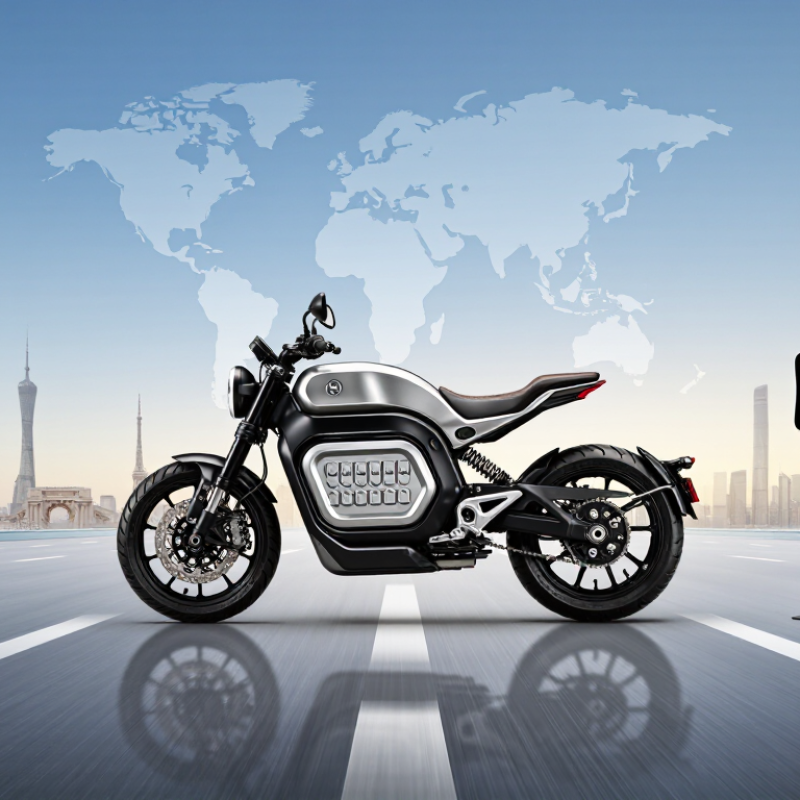
A luxury electric motorcycle should begin with a riding brief, not a glossy specification sheet. Define your weekly distance, road types, passenger needs, and preferred riding pace. A 30-kilometre urban commute requires different performance from weekend mountain touring. Mark your real priorities clearly: instant acceleration, quiet cruising, fast charging, or long-distance comfort.
The International Energy Agency reported more than 14 million electric cars sold worldwide in 2023. It also identifies electric two- and three-wheelers as the most electrified road-transport segment. This growth supports better charging networks and battery development, but motorcycles still vary widely. Check usable range, not laboratory range. Review battery warranty terms, charging time, home electrical capacity, and cold-weather performance. Deloitte’s 2024 Global Automotive Consumer Study also shows that charging access and charging time remain significant concerns for electric-vehicle buyers. Plan for imperfect infrastructure.
Your riding goal should shape the equipment list. For city use, examine low-speed balance, visibility, storage, and weather protection. For touring, inspect seat pressure, wind protection, luggage capacity, and roadside support. Ask whether the suspension suits your weight and typical roads. Luxury does not always mean comfort. My own buying mistake would be trusting peak power too quickly. It feels impressive during a short test ride, yet daily usability may matter more. Leave room for doubt, and test the motorcycle after an ordinary commute, not only on a polished showroom route.
Before comparing electric motorcycles, match the usable battery range to your primary riding purpose. The benchmarks below provide practical planning targets for urban commuting, mixed riding, and full-day touring.
Planning reference: approximately 100 km for regular urban use, 200 km for mixed city and highway riding, and 300 km for full-day touring. Actual range varies with speed, rider weight, temperature, terrain, passenger load, and accessory use. Always compare usable range rather than advertised maximum range.
Battery range deserves more than a headline figure. Compare the tested range with your daily route, passenger load, hills, and weather. Cold temperatures can reduce usable distance, sometimes noticeably. A larger battery may increase range, but it also adds weight and affects handling. Check battery capacity in kWh, warranty terms, expected degradation, and whether replacement support exists in your region. A claimed range is not a promise.
Charging systems can change ownership convenience. Confirm the motorcycle’s onboard charger rating and required voltage before purchase. A home charger may need dedicated electrical protection and professional installation. Public charging compatibility also matters, especially when traveling across countries. Compare charging time from 20 to 80 percent, not only a full-charge estimate. Fast charging is useful, but repeated high-power sessions can increase heat. Ask how the battery management system controls temperature.
Performance specifications need practical interpretation. Peak power looks impressive, yet continuous power better reflects sustained riding. Compare torque delivery, top speed, riding modes, braking hardware, suspension adjustment, and motorcycle weight. Software limits may change acceleration as the battery falls below a certain level. That detail is easy to miss. My own evaluation checklist would still be imperfect without a real test ride. Notice throttle smoothness, brake feel, screen readability, and stability on uneven roads. Service training and diagnostic access should also be verified before ordering.
Global buyers should treat safety as a measurable feature, not a marketing promise. Check braking performance, traction control, lighting, tire quality, and rider visibility. A well-engineered electric motorcycle should protect its battery with thermal monitoring, impact resistance, and a reliable emergency disconnect. Ask for recognized safety certifications and complete technical documents. Check the paperwork.
Build quality appears in details that photographs often hide. Inspect panel gaps, weld consistency, fasteners, cable routing, and battery mounting. The frame should feel solid over uneven pavement, without rattles or sharp vibration. Examine seals around the charging port, because rain and dust can expose weak construction quickly. Request range figures tested under different temperatures, rider weights, and speeds. Numbers can mislead.
Luxury design involves more than polished surfaces. A comfortable seat, clear daytime display, balanced controls, and smooth suspension matter during long rides. Materials should feel durable, while finishes should remain consistent around edges and joints. Confirm charging compatibility, local service access, warranty terms, and replacement-part availability before purchase. A beautiful motorcycle can still feel awkward after one hour. I still think many luxury designs overvalue appearance and undervalue repair access. That is an important flaw to question. Check every touchpoint yourself, from the switch texture to the firmness of the kickstand. Feel matters.
| No. | Evaluation Dimension | What Global Buyers Should Check | Relevant Evidence or Benchmark | Recommended Weight | Suggested Score |
|---|---|---|---|---|---|
| 1 | High-Voltage and Battery Safety | Review battery enclosure protection, insulation monitoring, short-circuit protection, thermal management, emergency isolation, and protection against electric shock during charging or maintenance. | Look for documented testing against applicable vehicle and battery requirements, including UN Regulation No. 136 for electric two-wheelers where adopted, plus clear emergency and service procedures. | 20% | 1–5 |
| 2 | Braking and Rider-Assistance Systems | Verify the presence and calibration of anti-lock braking, combined or linked braking, traction control, selectable riding modes, lighting visibility, and stable low-speed behavior. | Confirm that braking and lighting systems meet the destination market’s homologation rules. Test performance on dry and wet surfaces where permitted. | 18% | 1–5 |
| 3 | Build Quality and Durability | Inspect frame alignment, weld consistency, fasteners, suspension components, wiring protection, panel gaps, corrosion resistance, and the finish of high-contact parts. | Request documented endurance, vibration, corrosion, water-ingress, and load testing. An IP rating applies only to the tested assembly and conditions, not automatically to the complete motorcycle. | 16% | 1–5 |
| 4 | Charging Compatibility and Range Transparency | Compare connector type, onboard charger rating, charging time, portable-charger requirements, battery capacity, usable energy, and expected range under city, mixed, and high-speed riding. | Check whether range figures use a recognized test procedure in the target market. Treat advertised range as a test result, not a guaranteed distance in all weather or riding conditions. | 14% | 1–5 |
| 5 | Luxury Design and Ergonomics | Assess material quality, tactile feedback, seat comfort, switchgear precision, display readability, cable routing, paint consistency, lighting design, storage usability, and passenger comfort. | Use a physical inspection and a long-duration riding assessment. Luxury quality should remain consistent across visible surfaces, hidden joints, controls, and service-access areas. | 12% | 1–5 |
| 6 | Certification, Homologation, and Import Readiness | Confirm vehicle classification, type approval, VIN documentation, battery transport paperwork, local registration requirements, charger compatibility, and language-specific manuals. | Requirements vary by jurisdiction. Obtain official conformity documents before payment and verify that the exact configuration—not merely a similar model—has approval for the destination market. | 10% | 1–5 |
| 7 | After-Sales Service and Total Ownership | Evaluate warranty duration, battery warranty terms, replacement-part availability, diagnostic support, software updates, service intervals, roadside assistance, and recycling arrangements. | Ask for written coverage, exclusions, response times, service locations, battery-repair policy, and estimated costs for consumables and major components. | 10% | 1–5 |
| Total Evaluation Weight | 100% | Maximum: 5.0 | |||
Check road legality before paying a deposit. Requirements may cover power output, speed limits, lighting, braking, battery labeling, and type approval. UNECE regulations provide a useful reference, but local authorities decide registration. The IEA’s Global EV Outlook 2024 reported more than 10 million electric two- and three-wheelers sold globally in 2023. Strong demand does not guarantee local approval. Ask for the exact compliance certificate, not a marketing promise.
Calculate the full landed cost. Import duties, value-added tax, customs fees, port handling, and homologation charges can exceed early estimates. Battery classification may also affect transport documentation and insurance. Request a written customs quotation using the correct tariff code. Mistakes here are expensive. I have seen buyers focus on the motorcycle price and overlook storage fees at the port. That is an avoidable lesson.
Warranty wording deserves careful reading. Confirm coverage for the battery, charger, motor, software, and corrosion. Ask whether warranty repairs require shipping the motorcycle overseas. Verify trained technicians, diagnostic equipment, spare-part stock, and realistic response times in your country. The International Energy Agency’s Global EV Outlook highlights battery durability and charging infrastructure as key adoption factors. A premium machine without local service can become an attractive, silent sculpture. Also check whether software updates require an approved dealer or stable internet access. Availability sounds simple. It often is not.
For global buyers, a luxury electric motorcycle is more than its purchase price. Total ownership cost includes shipping, import duties, insurance, charging, servicing, software support, and depreciation. The International Energy Agency reports that electric two- and three-wheelers remain the largest electric road-vehicle segment by annual sales. However, luxury models often require specialized parts and trained technicians. A low supplier quote can become expensive after customs clearance and long-distance repairs.
Tip 1: Request a five-year ownership estimate. Include battery replacement risk, tire wear, brake components, home charging equipment, and local labor rates. BloombergNEF reported that average lithium-ion battery pack prices fell to 139 US dollars per kilowatt-hour in 2023. That trend helps, but premium replacement packs may cost far more than market averages. Ask for written battery capacity limits and warranty conditions.
Tip 2: Compare service coverage, not only specifications. Check whether parts are stocked near your country, and measure expected delivery times. The European Alternative Fuels Observatory shows that charging infrastructure varies sharply between regions. A supplier should explain connector compatibility, charging speeds, and emergency support. Public charging may also carry subscription fees or parking charges.
Tip 3: Test the total landed cost with an independent customs broker and insurer. Some estimates quietly exclude taxes or destination handling. I have seen spreadsheets look convincing until insurance, storage, and currency movements were added. My own checklist can still miss resale weakness in smaller markets. Ask for realistic resale assumptions, not optimistic forecasts.
Record your weekly distance, road types, passenger needs, and usual riding pace. A 30-kilometre commute needs different performance from mountain touring. Choose priorities carefully.
Check usable range, not only laboratory figures. Review charging time, battery warranty, home electrical capacity, and cold-weather performance. Plan for imperfect charging access.
Examine low-speed balance, rider visibility, storage, and weather protection. Test the motorcycle through traffic, narrow turns, and wet streets. Showroom comfort can mislead.
Check seat pressure, wind protection, luggage space, suspension, and roadside support. Ride for at least one ordinary hour before deciding. Peak power is not everything.
Inspect braking, traction control, lighting, tire quality, and rider visibility. Ask for battery thermal monitoring, impact protection, and an emergency disconnect. Check the paperwork.
Look at panel gaps, welds, fasteners, cable routing, and battery mounting. Check charging-port seals for rain and dust protection. Listen for rattles on uneven pavement.
Look for a comfortable seat, clear daytime display, balanced controls, and smooth suspension. Touch the switches and test the kickstand. Beauty may hide awkward repairs.
Confirm power limits, lighting, braking, battery labels, type approval, and registration requirements. Request exact compliance documents from the seller. Calculate duties, taxes, customs fees, storage, and inspection charges.
Confirm coverage for the battery, charger, motor, software, and corrosion. Ask about trained technicians, diagnostic tools, spare parts, and repair response times. A distant workshop changes ownership.
Do not focus only on the motorcycle’s listed price or peak power. Check service access, charging compatibility, replacement parts, and realistic range. I would leave room for doubt.
Buying a luxury electric motorcycle from an international supplier requires careful planning beyond style and performance. Start by defining your riding goals, preferred travel distance, terrain, comfort expectations, and desired level of technology. Then compare battery capacity, realistic riding range, charging time, charging compatibility, acceleration, handling, and other performance specifications. Safety systems, frame construction, suspension quality, braking performance, materials, finishing details, and ergonomic design should also reflect genuine luxury standards rather than appearance alone.
Before making a decision, confirm that the luxury electric motorcycle complies with the regulations in your country or region. Review import duties, registration requirements, warranty coverage, replacement parts, repair support, and the supplier’s ability to provide reliable after-sales service. Finally, calculate total ownership costs, including shipping, taxes, charging equipment, routine maintenance, insurance, battery care, and potential repairs. A balanced evaluation of usability, quality, support, and long-term expenses will help global buyers choose a motorcycle that delivers confidence, comfort, and lasting value.